A 14-Hour Loop in the Sky: The IndiGo Flight That Left Delhi Only to Return
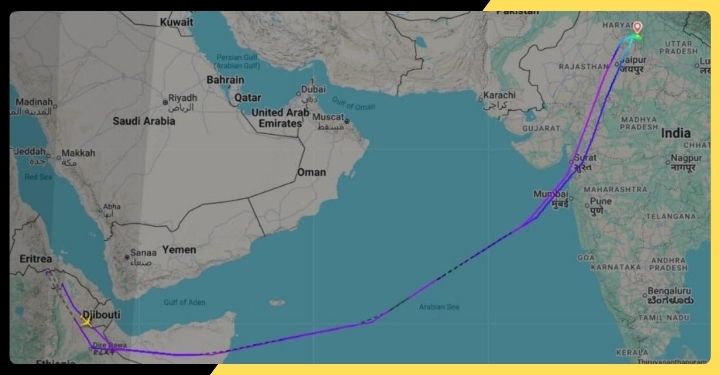
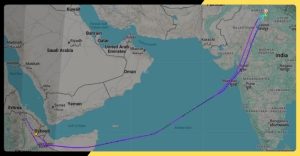
Passengers boarding the IndiGo flight from Delhi to Manchester expected to wake up in the United Kingdom. Instead, after nearly 14 hours in the air, they found themselves back where they had started: Delhi.
The unusual journey began routinely at Indira Gandhi International Airport in New Delhi. The flight, operated by IndiGo, was headed toward Manchester Airport, one of the UK’s busiest international gateways.
For passengers settling into what they expected would be a long but straightforward transcontinental flight, the experience soon took an unexpected turn.
Somewhere along the route, the crew made the decision to abandon the onward journey and return to Delhi. While the airline did not immediately disclose all operational specifics, aviation experts say such decisions are often based on a mix of technical, logistical, or regulatory considerations.
Modern aircraft are equipped with sophisticated monitoring systems that constantly track engine performance, cabin pressure, navigation equipment, and dozens of other parameters. If even a precautionary warning appears, pilots may choose to return to base where maintenance facilities and spare parts are readily available.
Another factor that can influence such decisions is timing. On long-haul flights, turning back earlier in the journey can sometimes be operationally simpler than continuing to a distant destination with potential complications waiting on arrival.
For the travelers onboard, however, the decision meant a dramatically extended flight with no geographical progress. By the time the aircraft touched down again at Delhi’s Indira Gandhi International Airport, passengers had spent almost 14 hours flying a route that ultimately formed a giant arc across international airspace before looping back.
Despite the inconvenience, aviation professionals emphasize that such decisions are rooted in strict safety standards. Airlines operate under global regulations that prioritize caution over schedule.
Returning to the departure airport also offers logistical advantages. The airline has its primary ground staff, maintenance teams, and passenger service infrastructure already in place there, enabling faster troubleshooting and passenger assistance.
For IndiGo, the incident arrives at a time when the airline is steadily expanding beyond its traditional short-haul network. The carrier has been exploring longer international routes that connect India directly to destinations across Europe and other regions.
Long-haul aviation, however, introduces new operational complexities. Fuel management, airspace coordination, weather patterns across multiple countries, and crew duty regulations all interact in ways that can complicate decision-making mid-flight.
After landing back in Delhi, passengers were expected to receive assistance with rebooking, accommodations, and updated travel arrangements. Airlines typically mobilize additional staff in such cases to manage disruptions and ensure travelers eventually reach their destinations.
While the experience may have been frustrating for those onboard, the incident serves as a reminder that in aviation, the safest decision is sometimes the most inconvenient one.
Journalist Details

- Jitendra Kumar is an Indian journalist and social activist from Hathras in Uttar Pradesh is known as the senior journalist and founder of Xpert Times Network Private Limited.
Latest entries
 NewsMarch 9, 2026A 14-Hour Loop in the Sky: The IndiGo Flight That Left Delhi Only to Return
 Latest NewsMarch 9, 2026Jaishankar Reaffirms India’s Neutral Stand, Urges Diplomacy in West Asia War
 Crime NewsMarch 7, 2026Six Arrested So Far in Uttam Nagar Holi Lynching Case as Probe into Tarun Kumar’s Death Intensifies
 Bharat StoriesMarch 7, 2026Career Story: How Vibhanshu Upadhyay Built a Professional Footprint in India’s Luxury Wedding Industry