West Asia Tensions Push Indian Restaurants to Rework Kitchen Energy Strategies
As geopolitical tensions in West Asia raise concerns about potential disruptions in global energy supplies, India’s restaurant sector is reassessing how it powers its kitchens. LPG, the backbone of most commercial kitchens in the country, could face price volatility if the conflict affects supply routes or production.
While there is currently no immediate shortage, restaurant owners and industry bodies say the situation has prompted a renewed focus on energy diversification, operational efficiency, and cost management.
India imports a significant portion of its LPG requirements, with West Asian nations playing a critical role in the supply chain. Any instability in the region can quickly translate into fluctuations in fuel prices, which directly impact operating costs for restaurants.
For many establishments, LPG is among the largest recurring expenses after rent and salaries. Even modest price increases can significantly affect margins, particularly for small and mid-sized eateries operating on tight budgets.
“The hospitality sector is very sensitive to fuel prices,” said a food service industry analyst. “Unlike manufacturing industries, restaurants can’t easily absorb cost spikes without adjusting menu prices or finding operational efficiencies.”
In response, many restaurants are conducting internal energy audits to understand how LPG is used across cooking processes. Some chains are experimenting with partial electrification of their kitchens—replacing gas-based equipment with induction cooktops, electric ovens, and automated cooking systems.
Another emerging strategy is menu engineering. Restaurants are evaluating whether certain dishes that require prolonged gas usage can be prepared using alternative techniques or equipment.
Cloud kitchens and delivery-first brands, which often operate from smaller, technology-enabled facilities, are leading this shift. Their kitchens are typically designed for efficiency and can more easily integrate electric appliances.
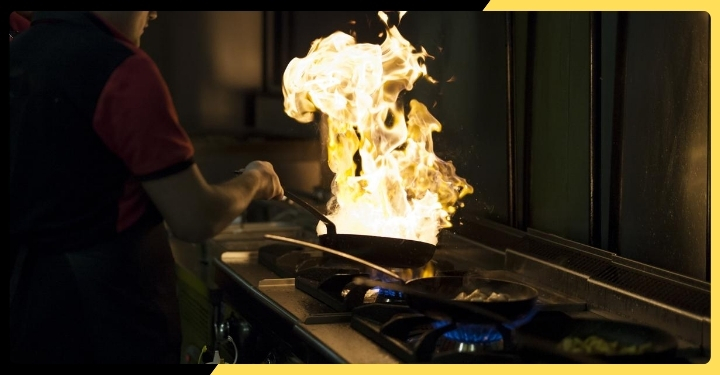
For traditional dine-in restaurants, the transition is slower. Many cuisines—particularly North Indian, Mughlai, and Chinese—rely heavily on high-intensity flames and specialized equipment such as tandoors and woks.
Still, restaurant groups are exploring ways to reduce dependence on LPG without compromising food quality. Some are installing energy-efficient burners that consume less gas, while others are investing in modern combi-ovens that can perform multiple cooking functions using electricity.
Industry associations are also urging policymakers to ensure stable LPG supply for commercial users if the global situation worsens. The hospitality sector, which supports millions of jobs across India, depends heavily on uninterrupted energy access.
“Energy security is essential for the survival of small restaurants,” said a representative from a restaurant association. “Any major disruption could affect not just businesses but also the livelihoods of workers.”
For now, the industry remains in a watch-and-wait mode. But the West Asia conflict has served as a reminder that global events can quickly ripple through local economies.
In the long run, many experts believe the current situation could accelerate modernization of commercial kitchens in India—making them more efficient, technologically advanced, and adaptable to changing energy landscapes.
Journalist Details

- Jitendra Kumar is an Indian journalist and social activist from Hathras in Uttar Pradesh is known as the senior journalist and founder of Xpert Times Network Private Limited.
Latest entries
 NewsMarch 12, 2026Iran Warns Gulf States: Military Strikes Will Continue as Regional War Intensifies
 NewsMarch 11, 2026West Asia Tensions Push Indian Restaurants to Rework Kitchen Energy Strategies
 Latest NewsMarch 10, 2026Education Policy Sparks Demonstrations: Why Students Are Demanding a UGC Rollback
 NewsMarch 9, 2026A 14-Hour Loop in the Sky: The IndiGo Flight That Left Delhi Only to Return