Ancestry and Diplomacy: How Khomeini’s Indian Link Re-enters Debate After Iran’s Power Shift
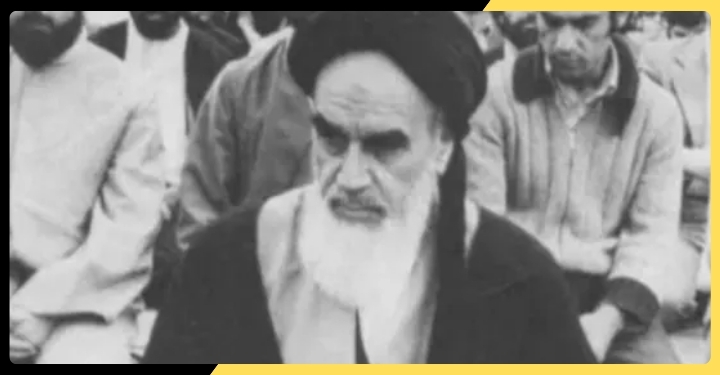
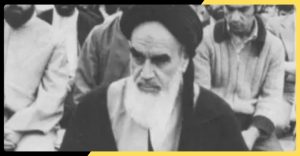
In the wake of Iran’s leadership upheaval, renewed attention has turned to a historical footnote that binds Iran and India: the Indian ancestry of the Islamic Republic’s founding figure, Ayatollah Ruhollah Khomeini. Though the recent death of Khamenei has triggered the current transition, public discourse — particularly in India — has revisited the origins of the revolutionary cleric whose ideology reshaped Iran in 1979.
Khomeini’s grandfather is widely believed to have hailed from Kintoor in Barabanki, located in the northern Indian state of Uttar Pradesh. The family later migrated to Iran, where Khomeini emerged as the central figure in overthrowing the Shah and establishing the Islamic Republic. While this ancestral link has no direct bearing on contemporary policymaking, it has resurfaced symbolically at a time when Tehran’s leadership is once again in flux.
For some commentators in India, the historical connection serves as a reminder of the centuries-old cultural exchanges between the Persian and Indian civilizations — from language and poetry to trade and scholarship. Persian once influenced court culture across large parts of the Indian subcontinent, and shared religious and intellectual traditions have long shaped interactions between the two societies.
However, analysts caution against overstating the political significance of ancestry. Modern statecraft is driven less by lineage and more by strategic priorities. India’s engagement with Iran has centered on energy imports, infrastructure collaboration, and geopolitical coordination in Afghanistan and Central Asia. These considerations are unlikely to shift dramatically because of historical narratives.
That said, symbolism matters in diplomacy. Cultural familiarity can provide a softer layer of engagement during difficult negotiations. In times of uncertainty, shared historical references sometimes serve as diplomatic icebreakers, reinforcing goodwill even when strategic interests diverge.
As Iran selects its next Supreme Leader, observers in New Delhi will watch closely to gauge whether the incoming leadership signals continuity or transformation. If Tehran emphasizes regional assertiveness, India may need to tread carefully to preserve its broader partnerships. If, alternatively, the new leadership seeks economic normalization and outreach, India could find renewed opportunities for trade and investment.
Ultimately, the rediscovery of Khomeini’s Indian roots underscores a broader truth: geopolitical relationships are rarely built overnight. They are layered with history, culture, and evolving national interests. While ancestry alone will not define the future of India-Iran ties, it adds a human dimension to a relationship that now stands at another historic crossroads.
Journalist Details

- Jitendra Kumar is an Indian journalist and social activist from Hathras in Uttar Pradesh is known as the senior journalist and founder of Xpert Times Network Private Limited.
Latest entries
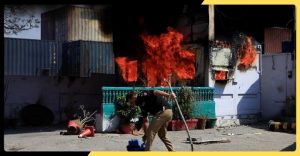
 Latest NewsMarch 1, 2026Protesters Breach Barriers at U.S. Consulate in Karachi; Security Forces Fire Tear Gas, Eight Killed
 Latest NewsMarch 1, 2026Ancestry and Diplomacy: How Khomeini’s Indian Link Re-enters Debate After Iran’s Power Shift
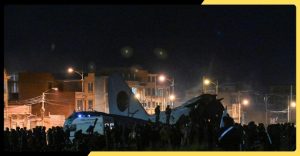
 NewsFebruary 28, 2026Banknote Shipment Ends in Disaster as Air Force Plane Goes Down in Capital
 NewsFebruary 27, 2026Kolkata Shaken by Sudden Tremors, Panic Grips Office-Goers