From Non-Alignment to Embrace: How Narendra Modi Redefined India’s Israel Policy
Under Prime Minister Narendra Modi, India’s foreign policy toward Israel underwent a visible and symbolic transformation. For decades after independence, New Delhi maintained a cautious balance: formally recognizing Israel in 1950 but limiting high-level engagement in order to support the Palestinian cause and maintain solidarity with the Arab world. This posture was rooted in India’s leadership role in the Non-Aligned Movement and its historic support for Palestinian self-determination.
The shift began gradually in the 1990s when India established full diplomatic ties with Israel in 1992. Defense cooperation quietly expanded, especially after the Kargil War in 1999, when Israel supplied critical military hardware. Yet, successive Indian governments avoided public displays of warmth that might alienate Arab partners or domestic constituencies sensitive to the Palestinian issue.
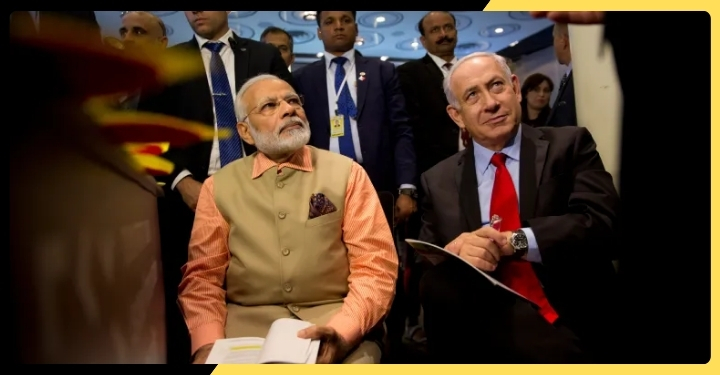
Modi changed that calculus. In 2017, he became the first Indian prime minister to visit Israel, breaking with the longstanding practice of coupling trips to Israel with visits to Palestinian territories. His public camaraderie with Israeli Prime Minister Benjamin Netanyahu signaled not only diplomatic normalization but strategic alignment. The visit emphasized innovation, agriculture, water technology, and defense collaboration—areas where Israel has developed a global reputation.
Critics argue that this overt embrace sidelined Palestine. While India has continued to vote in favor of Palestinian rights at the United Nations and maintains diplomatic relations with the Palestinian Authority, the symbolism of Modi’s outreach marked a clear prioritization. The decoupling of Israel from Palestine in diplomatic engagements reflected a broader strategic doctrine: issue-based alignment over ideological positioning.
Supporters contend that India’s evolving interests necessitated the shift. Israel emerged as one of India’s top defense suppliers and a key partner in cybersecurity and counterterrorism. Strengthening ties aligned with Modi’s vision of India as a technologically advanced and security-conscious power.
However, the recalibration also had geopolitical implications. India’s closer embrace of Israel paralleled growing ties with Gulf states such as the United Arab Emirates and Saudi Arabia, demonstrating that support for Palestine was no longer a prerequisite for regional engagement. In effect, Modi’s government sought to “de-hyphenate” Israel and Palestine—treating each relationship independently.
Whether this approach represents pragmatic diplomacy or a departure from India’s historical commitments remains debated. What is clear is that Modi’s tenure marked a turning point: walls that once separated India and Israel—rooted in Cold War politics and postcolonial solidarity—were decisively lowered, even if that meant redefining India’s posture toward Palestine.
Journalist Details

Latest entries
 NewsFebruary 24, 2026From Non-Alignment to Embrace: How Narendra Modi Redefined India’s Israel Policy
 Viral NewsFebruary 20, 2026Congress Slams PM Over UPI Credit, Says Modi ‘Takes All the Glory’
 NewsFebruary 20, 2026Rohit Pawar Alleges Two Additional Fuel Tanks on Ajit Pawar’s Aircraft, Calls for Formation of Oversight Committee
 Latest NewsFebruary 20, 2026WB SIR: Supreme Court Assigns Judicial Officers to SIR Work Amid ‘Trust Gap’ Between Bengal Government and ECI