Maya (2026) — Full Movie Review
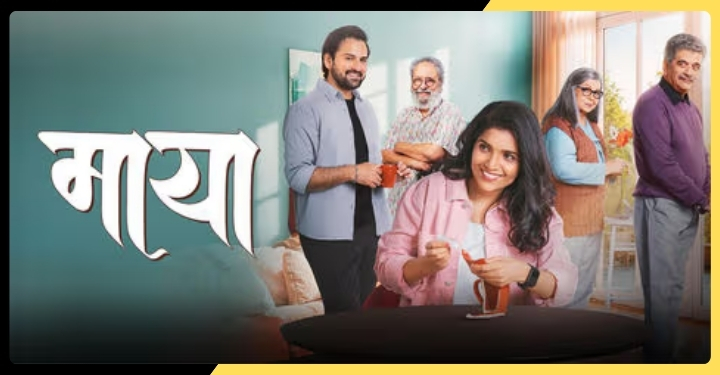
Title: Maya
Director: Aditya Ingale
Genre: Drama / Romance
Runtime: 2 hr 20 min
Release Date: 27 February 2026
Language: Marathi
Maya (2026) is a quietly powerful Marathi drama that explores love, loss, trust, and emotional healing. Far from big‑budget spectacle or melodrama, the film delves into the fragile human heart through relatable, lived‑in experiences. With sensitive storytelling, grounded performances, and a focus on emotional realism, it offers a thoughtful cinematic journey — one that rewards patience and empathy.
Premise — A Story of Second Chances
At its core, Maya is about a woman who has learned to live without love — not out of indifference, but because love once injured her deeply. After a painful betrayal and the trauma of being unable to conceive, Maya has sealed off her heart and retreated into solitude and work. Her life changes when she meets Mahesh, a difficult patient recovering from a fracture, and his optimistic young son, Siddharth.
Through repeated physiotherapy sessions, Maya finds not just physical resistance to overcome but emotional resistance as well. Mahesh’s gruff exterior masks a wounded soul, while Siddharth’s cheerful warmth offers a stark contrast to Maya’s guarded nature. Their bond — initially hesitant, sometimes frustrating, and at times unexpectedly tender — becomes the emotional engine of the film.
Narrative Structure — Subtle, Slow, and Reflective
Maya does not chase dramatic twists or action‑packed plot turns. Instead, it unfolds in an organic, almost meditative rhythm. Each scene is carefully calibrated to reveal inner transformations rather than external shocks. This pacing allows the audience to dwell within the characters’ emotional landscape, experiencing their growth in real time rather than being told what to feel.
The story’s emotional beats are delivered through quiet interactions rather than grand speeches. Conversations over tea, difficult physical therapy sessions, and shared moments of vulnerability all serve to illuminate the characters’ inner worlds. In this way, the film invites viewers to invest not just in what happens, but why it matters.
Performances — Nuance Over Flashiness
One of the film’s greatest strengths lies in its central performances. The title character, Maya, is portrayed with remarkable authenticity and depth. Without resorting to theatrical gestures or exaggerated expressions, the actor captures the subtlety of a woman who is both strong and fragile — someone who guards her heart not out of hardness, but fear of being hurt again.
Mahesh, initially resistant and skeptical, provides a compelling contrast. His rough edges gradually soften, revealing vulnerability and humanity. This slow reveal helps the audience empathize with his journey as much as Maya’s own. Siddharth — bright, sincere, and unburdened by past trauma — acts as both a catalyst and mirror, reminding us that hope can be persistent and contagious.
The chemistry between these characters feels authentic rather than manufactured. Emotional shifts occur subtly, often in fleeting expressions or quiet gestures rather than overt declarations — a choice that suits this story’s grounded tone.
Themes — Healing, Trust, and Human Resilience
Maya engages with several universal human themes:
Emotional Healing and Vulnerability
At its heart, the film is an exploration of healing — a theme that is universal yet deeply personal. Maya’s professional world revolves around healing bodies, but her personal journey involves learning how to heal her heart. The film suggests that true healing requires vulnerability: the courage to let others in, even when the risk of hurt remains.
Bridging Generational Perspectives
Siddharth’s youthful optimism contrasts sharply with Maya’s cautious reserve. This generational interplay adds emotional richness. Siddharth doesn’t just bring humor and lightness; he embodies the possibility of hope that refuses to be extinguished by disappointment. His presence challenges Maya’s belief that life without love is safer than life with the risk of pain.
Connection Through Shared Struggles
The film also underscores how shared struggle can bring people together. By working through pain — both physical and emotional — the characters discover mutual support and understanding. That shared journey becomes the basis for deeper connection, illustrating how relationships can arise from unexpected places when individuals allow themselves to be seen.
Direction and Cinematic Style
Director Aditya Ingale takes a restrained yet confident approach. The focus remains on characters and their interior worlds rather than flashy visuals or dramatic set pieces. Cinematography favors natural light and intimate framing, creating an atmosphere that feels lived in and personal. Dialogue is natural and unforced, allowing emotional weight to emerge from everyday moments rather than artificial tension.
This choice works well for a film that values emotional authenticity above all else. It gives Maya a reflective tone that encourages viewers to slow down and engage with the characters’ evolving inner lives.
Strengths and Limitations
Strengths:
- Authentic performances that feel lived‑in, not performative.
- Emotionally rich characters who evolve naturally over time.
- Thoughtful themes of trust, vulnerability, and resilience.
- Organic storytelling with quiet emotional resonance.
Limitations:
- Slow pacing might challenge those seeking more conventional drama or high tension.
- Narrative restraint means emotional payoffs are subtle rather than explosive — which is not everyone’s preference.
Conclusion — A Poignant, Thoughtful Film
Maya (2026) is a heartfelt drama that respects its audience’s ability to engage with quiet emotional truth. It is a film that rewards patience, reflection, and empathy — offering a moving portrayal of how we learn to open our hearts again after being hurt. While its pacing and restraint may not captivate every viewer, those who appreciate character‑driven stories will find much to admire here.
In an era of big effects and louder narratives, Maya stands out for its simplicity, emotional honesty, and the warmth it carries — much like the connections it so tenderly explores on screen.
Journalist Details

- Jitendra Kumar is an Indian journalist and social activist from Hathras in Uttar Pradesh is known as the senior journalist and founder of Xpert Times Network Private Limited.
Latest entries
 Latest NewsApril 7, 202695% Muslim Voter Deletions Spark Political Storm in Nandigram
 Bharat StoriesApril 7, 2026Saaniya Jackson: “I wanted to settle down young I am well established now to build a home & grow like a team”
 NewsApril 4, 2026Controversy in AAP: Raghav Chadha Calls Charges ‘Baseless’, Political Heat Intensifies
 Latest NewsMarch 30, 2026Bihar CM Nitish Kumar Quits Legislative Council Seat, Triggers Debate Over Political Strategy