No-Confidence Motion Against Speaker Signals Deepening Rift in Parliament
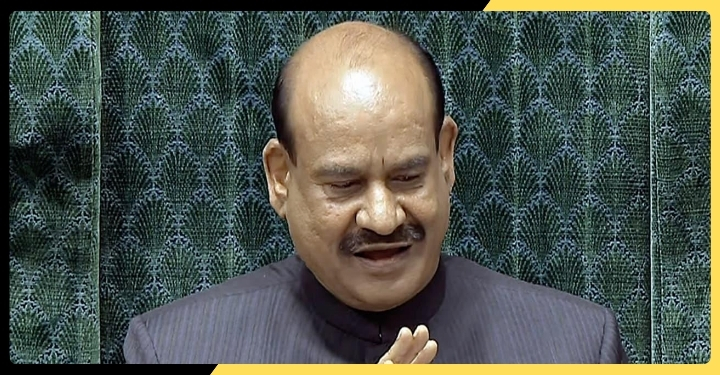
In a dramatic escalation of political tensions in Parliament, the Congress party has submitted a no-confidence motion against Lok Sabha Speaker Om Birla, alleging partisan conduct and repeated violations of parliamentary conventions. The move, rare in India’s parliamentary history, underscores the deepening confrontation between the opposition and the ruling dispensation, and raises serious questions about the functioning of democratic institutions in the country.
According to Congress leaders, the motion stems from what they describe as a consistent pattern of bias displayed by the Speaker in favor of the government. Senior party figures argue that opposition members have been denied adequate opportunity to raise issues of public importance, while controversial bills have been passed with limited debate and amid frequent disruptions. The party maintains that the Speaker, as the constitutional guardian of the House, is expected to act with neutrality and uphold the rights of all members, irrespective of party affiliation.
The Congress has alleged that their repeated appeals to follow established parliamentary norms were ignored, leaving them with no option but to invoke the extraordinary mechanism of a no-confidence motion against the Speaker. Party leaders stressed that the decision was not taken lightly and was intended to draw national attention to what they see as a steady erosion of parliamentary accountability.
Speaker Om Birla, who has served in the role since 2019, has not made a detailed public statement in response to the motion, though sources close to the Speaker’s office have rejected the allegations as politically motivated. They contend that the Speaker has acted strictly in accordance with the rules of procedure and has made continuous efforts to ensure the smooth functioning of the House amid persistent disruptions.
The ruling party has strongly criticized the Congress move, describing it as an attempt to politicize the office of the Speaker and undermine parliamentary decorum. Government leaders argue that the opposition’s frequent walkouts and slogan-shouting have forced the Speaker to take firm decisions to maintain order, and that such actions should not be misconstrued as bias.
Constitutional experts note that a no-confidence motion against the Speaker is extremely uncommon in India’s parliamentary system. The Speaker is expected to rise above party politics after assuming office, and historically, the position has enjoyed a degree of institutional respect even during periods of intense political rivalry. While the Constitution allows for the removal of a Speaker through a resolution passed by the House, such motions are typically seen as a last resort and carry significant symbolic weight.
Opposition parties beyond Congress have offered mixed reactions. Some have expressed solidarity with the concerns raised about shrinking space for debate in Parliament, while others have been cautious, wary of setting a precedent that could further politicize constitutional offices. This divergence highlights the broader challenge of opposition unity in an increasingly polarized political environment.
The timing of the motion is also significant. Parliament has witnessed repeated disruptions in recent sessions, with key legislation passed amid protests and adjournments. The opposition has accused the government of rushing bills without sufficient scrutiny, while the government has countered that obstructionist tactics have left it with little choice. Against this backdrop, the no-confidence motion against the Speaker adds another layer of complexity to an already fraught legislative climate.
Public reaction to the development has been divided. Supporters of the opposition view the motion as a necessary stand to protect democratic processes and parliamentary integrity. Critics, however, see it as a political stunt designed to generate headlines rather than bring about meaningful reform. Social media platforms have been abuzz with debate, reflecting broader concerns about the health of parliamentary democracy.
If admitted, the motion would require discussion and a vote in the Lok Sabha, though the numerical strength of the ruling alliance makes its passage unlikely. Nonetheless, analysts point out that the real impact of the move lies less in its outcome and more in the message it sends. By formally challenging the Speaker, the Congress has sought to frame the narrative around institutional neutrality and democratic norms, issues that resonate beyond the walls of Parliament.
The episode also raises broader questions about the evolving role of the Speaker in a highly charged political environment. As legislatures become more polarized, maintaining impartiality while ensuring order has become increasingly difficult. The current controversy may prompt renewed discussion on reforms aimed at strengthening the independence of the Speaker’s office, including changes to the appointment process or clearer procedural safeguards.
As Parliament continues its session under the shadow of this unprecedented move, all eyes will be on how the matter is handled. Whether the motion proceeds to debate or is dismissed on procedural grounds, it has already succeeded in sharpening the spotlight on parliamentary conduct and the balance of power between the government and the opposition. In that sense, the no-confidence motion against Speaker Om Birla marks not just a political confrontation, but a moment of reckoning for India’s legislative democracy.
Journalist Details

Latest entries
 Latest NewsApril 1, 2026Social Media News May Soon Fall Under IT Regulations in India
 Latest NewsMarch 26, 2026LPG Booking Rules Remain Unchanged, Confirms Centre
 Latest NewsMarch 24, 2026Train Ticket Cancellations to Cost More: Railways Updates Refund Policy
 Latest NewsMarch 14, 2026After Detention Row, Authorities Drop NSA Charges Against Sonam Wangchuk Following Ladakh Climate Protest