
Opponents Revive Martin Crowe’s 1992 World Cup Tactics to Contain Indian Batting Line-Up
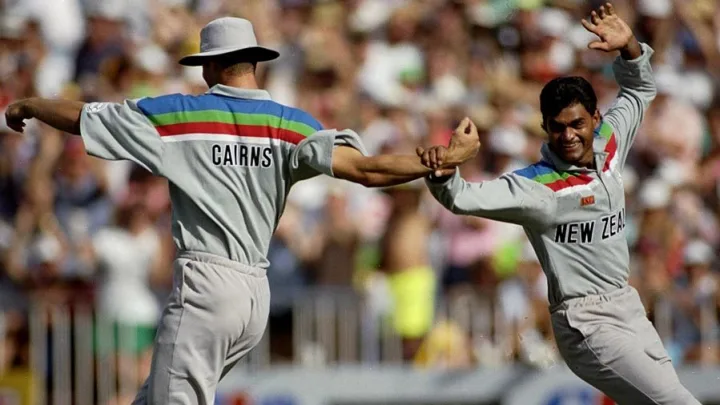
Opponents Revisit Martin Crowe’s 1992 Blueprint to Check India’s Batting Firepower
A Classic Strategy Returns to the Spotlight
Cricket strategy is coming full circle as rival teams dig into the tactical archives to counter India’s powerful batting unit. The latest approach drawing attention is inspired by former New Zealand captain Martin Crowe, whose bold innovations during the 1992 Cricket World Cup changed one-day cricket forever.
With India continuing to set benchmarks in white-ball batting, opposition sides are reapplying Crowe’s unconventional methods — blending them with modern analytics — to slow scoring and create wicket opportunities.
Early Spin: Disrupting the Powerplay Surge
One of Crowe’s most daring tactical calls in 1992 was opening the bowling with spin instead of pace. At a time when fast bowlers dominated the new ball, this move stunned opponents and proved highly effective in restricting runs early.
Today, teams are reviving the same ploy against India. By introducing spinners inside the powerplay, captains aim to deny Indian openers the pace they thrive on. The reduced ball speed affects timing, limits boundary options, and often forces batters into mistimed attacking shots.
This tactic has gained traction particularly because India’s top order tends to capitalise heavily on fielding restrictions. Slowing the game early helps opponents regain control.
Smart Field Placements and Bowling Changes
Crowe’s captaincy was also defined by inventive field settings and sharp bowling rotations. He frequently shuffled bowlers in short bursts, ensuring batters never settled against one style.
Modern teams are executing a similar formula. Seamers using cutters, spinners varying pace, and all-rounders filling transition overs are being rotated rapidly. This constant change of rhythm prevents Indian batters from lining up bowlers.
Field placements, too, are becoming more dynamic — boundary riders cutting off lofted drives while inner rings choke singles. The aim is simple: build frustration through restriction.
Pressure Through Containment
Rather than chasing wickets recklessly, Crowe’s philosophy revolved around sustained pressure. Dot balls were treated as weapons, gradually forcing errors.
Opponents are applying the same containment model today. By dragging scoring rates down — especially between overs 7 to 25 — they attempt to push India’s middle order into high-risk acceleration later in the innings.
Given India’s batting depth, teams believe scoreboard pressure — not just wickets — is key to breakthroughs.
Analytics Strengthen Old-School Tactics
What separates today’s execution from 1992 is technology. Teams now rely on data insights — strike-rate zones, preferred scoring arcs, and matchup analytics — to refine Crowe’s ideas.
Where Crowe relied on instinct, modern captains combine intuition with predictive modelling. This fusion has made the revived strategy even more structured and targeted.
India’s Tactical Response
India, however, is adapting quickly. Batters are training against spin in the powerplay, rehearsing low-pace scenarios, and refining strike rotation.
Team strategists are also promoting flexibility in batting order to counter bowling matchups. The contest has evolved into a tactical chess battle — one rooted in history yet shaped by modern innovation.
Journalist Details

Latest entries
 Latest NewsMarch 18, 2026Palam Inferno: Nine Killed as Fire Engulfs Residential Building in Delhi
 NewsFebruary 24, 2026From Non-Alignment to Embrace: How Narendra Modi Redefined India’s Israel Policy
 Viral NewsFebruary 20, 2026Congress Slams PM Over UPI Credit, Says Modi ‘Takes All the Glory’
 NewsFebruary 20, 2026Rohit Pawar Alleges Two Additional Fuel Tanks on Ajit Pawar’s Aircraft, Calls for Formation of Oversight Committee