
‘Thaai Kizhavi’ Review: A Dazzling Matriarch Turns Family Feuds into Comic Gold
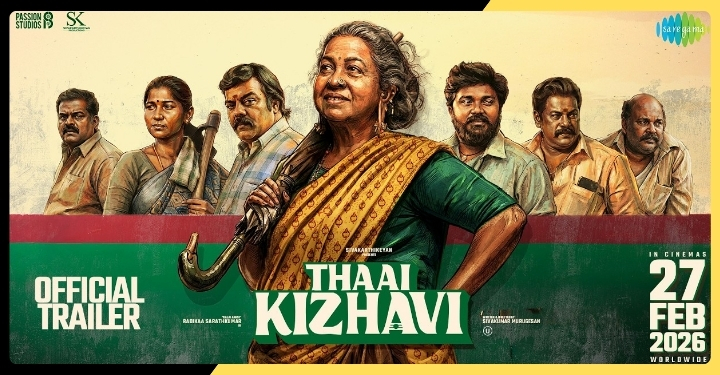
“Thaai Kizhavi” thrives on contradiction. It is both loud and intimate, excessive yet oddly restrained. At the centre stands a matriarch who understands that power is not merely inherited — it is performed. The film transforms what might have been a routine inheritance drama into a flamboyant comedy about authority, pride and generational recalibration.
The narrative orbits a wealthy family whose prosperity is built on decades of shrewd decisions. Their formidable elder presides over this empire with unwavering confidence. She is not interested in quiet retirement; she relishes control. Her children, meanwhile, eye the future with barely concealed impatience. The resulting friction fuels the film’s buoyant energy.
The screenplay structures itself around escalating schemes. Each family member attempts, in subtle or spectacular fashion, to influence the matriarch’s decisions. These manoeuvres provide ample opportunity for situational humour. Conversations become battlegrounds, celebratory gatherings morph into strategic negotiations, and affection is frequently laced with calculation.
What keeps the film from descending into cynicism is its affectionate gaze. The matriarch may be domineering, but she is not cruel. Her authority is rooted in lived experience — in years of balancing accounts, settling disputes and preserving reputation. The younger generation’s frustration is similarly understandable; they crave autonomy and modernisation. By granting each side credible motivations, the film achieves a balance that strengthens its comedic payoffs.
Visually, the production design amplifies the sense of legacy. Family portraits line expansive hallways, silently reminding viewers of history’s weight. Gold functions as both décor and metaphor, symbolising security and continuity. The camera frequently lingers on heirlooms, suggesting that objects, like people, accumulate stories over time.
Humour emerges organically from personality clashes. The matriarch’s old-school sensibilities collide with contemporary attitudes toward business and lifestyle. One particularly sharp sequence involves a heated debate over digital investments versus tangible assets, with punchlines landing precisely because they spring from generational worldview differences rather than cheap mockery.
The pacing remains brisk. Scenes rarely overstay their welcome, and even sentimental passages are trimmed to preserve momentum. This editorial discipline allows the film to juggle multiple subplots without losing coherence. Romantic tensions, sibling rivalries and financial anxieties intersect, yet the matriarch remains the gravitational centre holding the narrative together.
The film’s tonal confidence is evident in its treatment of melodrama. Emotional confrontations are heightened but never hysterical. Tears are shed, but they are quickly followed by defiant humour. This oscillation between sentiment and satire is a hallmark of masala storytelling, and here it is handled with refreshing assurance.
Importantly, the matriarch is not reduced to nostalgia. She evolves. Faced with undeniable change, she demonstrates adaptability without surrendering identity. This character progression lends the final act satisfying resonance. The family’s resolution does not hinge on a simplistic victory of old over new or vice versa; instead, it suggests a negotiated future shaped by mutual recognition.
Music and choreography inject celebratory flair. Songs are staged not merely as diversions but as communal expressions of unity and rivalry. Dance floors become arenas where hierarchies momentarily dissolve, only to reassert themselves in playful fashion.
There are occasional narrative conveniences — coincidences that smooth over complex financial entanglements, revelations that arrive with convenient timing. Yet the film’s buoyant tone encourages viewers to accept these liberties as part of its theatrical charm.
Ultimately, “Thaai Kizhavi” distinguishes itself through character-driven comedy. It recognises that laughter deepens when audiences invest emotionally. By grounding its spectacle in relatable family dynamics, the film ensures that its glitter never feels hollow. What remains after the jokes subside is an affectionate portrait of a household negotiating the delicate balance between reverence and reinvention.
Journalist Details

- Jitendra Kumar is an Indian journalist and social activist from Hathras in Uttar Pradesh is known as the senior journalist and founder of Xpert Times Network Private Limited.
Latest entries
 Latest NewsMarch 1, 2026Protesters Breach Barriers at U.S. Consulate in Karachi; Security Forces Fire Tear Gas, Eight Killed
 Latest NewsMarch 1, 2026Ancestry and Diplomacy: How Khomeini’s Indian Link Re-enters Debate After Iran’s Power Shift
 NewsFebruary 28, 2026Banknote Shipment Ends in Disaster as Air Force Plane Goes Down in Capital
 NewsFebruary 27, 2026Kolkata Shaken by Sudden Tremors, Panic Grips Office-Goers