2026 Assembly Elections Send Powerful Political Message Across India
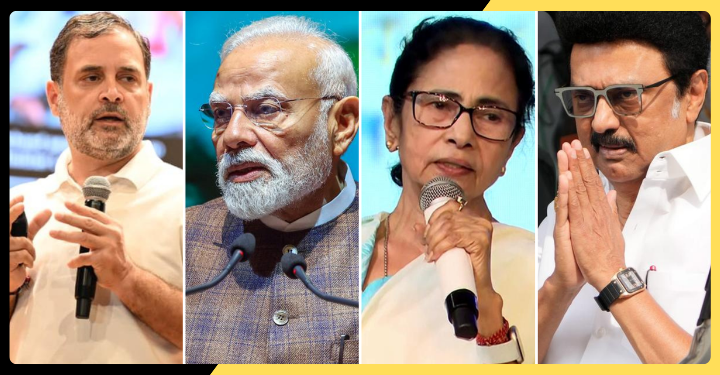
The results of the 2026 Assembly elections have delivered a powerful political message across India, setting the stage for intense national debates and strategic recalculations among major parties. From the BJP to the Congress and influential regional forces, every political formation viewed these elections as a critical milestone before the next Lok Sabha battle.
The BJP entered the elections with confidence, banking on its strong organizational machinery and welfare-focused governance agenda. Party leaders highlighted achievements in infrastructure development, digital governance, and public welfare programs while projecting stability and decisive leadership as their main strengths. Massive rallies, high-energy campaigns, and targeted voter outreach marked the BJP’s election strategy across multiple states.
For the Congress, the elections were an opportunity to demonstrate political recovery and reclaim lost ground. The party attempted to focus public attention on rising living costs, unemployment, and concerns over economic inequality. Congress leaders also tried to revive traditional support bases by promising social welfare measures and greater state-level autonomy.
Regional parties, however, ensured that the elections remained deeply rooted in local realities. In many states, charismatic regional leaders transformed the contests into battles centered on identity, language, and regional pride. Their campaigns often challenged what they described as increasing centralization of power, appealing to voters who prioritized local governance and state-specific issues.
The election results reflected the diversity of India’s political landscape. In some states, voters rewarded incumbent governments for welfare delivery and infrastructure improvements. In others, anti-incumbency sentiment appeared strong, driven by dissatisfaction over unemployment, rising prices, or local administrative failures.
Political experts believe the elections underline a key trend in Indian politics: voters increasingly distinguish between national and state elections. A party’s national popularity does not automatically guarantee state-level success, especially where local leadership and grassroots engagement play a major role.
The rise of issue-based voting also became evident during these elections. Farmers’ concerns, youth employment, women’s welfare, education, healthcare access, and urban infrastructure dominated campaign conversations. Political parties invested heavily in promises aimed at addressing these everyday challenges, reflecting the electorate’s growing focus on governance outcomes.
Another major feature of the elections was the extensive use of digital campaigning. Social media platforms, AI-driven outreach, targeted advertisements, and online volunteer networks became central tools for political communication. Young voters, especially in urban and semi-urban regions, were significantly influenced by digital narratives and real-time campaign engagement.
Women voters emerged as another decisive factor in many constituencies. Parties introduced schemes focused on financial support, cooking gas subsidies, healthcare assistance, and women’s safety to attract female voters. Analysts noted that women’s turnout and voting preferences may have played a crucial role in determining results in several closely contested seats.
The elections also exposed challenges within opposition coordination. While alliances succeeded in some regions, lack of unity in others divided anti-incumbent votes. Political strategists are likely to closely study these outcomes while preparing for future national contests.
For regional parties, strong performances reaffirmed the continuing relevance of localized politics in India’s federal structure. Leaders of these parties argued that voters still value state-specific leadership capable of addressing regional aspirations more effectively than national narratives alone.
As the political dust settles, the 2026 Assembly elections are being interpreted as a defining democratic exercise that may shape alliances, leadership debates, and campaign strategies for years to come. The results have not only determined state governments but also revealed deeper shifts in voter expectations across the country.
Journalist Details

- Jitendra Kumar is an Indian journalist and social activist from Hathras in Uttar Pradesh is known as the senior journalist and founder of Xpert Times Network Private Limited.
Latest entries
 Latest NewsSeptember 27, 2026Rape Allegation Triggers Student Anger at LPU as Police Move In to Restore Order
 NewsSeptember 25, 2026Taiwan Remains One of the Most Sensitive Issues Between Washington and Beijing
 Latest NewsSeptember 24, 2026Fire Engulfs Delhi-Mahoba Sleeper Bus on Yamuna Expressway, Nine Dead
 Latest NewsSeptember 21, 2026Millions on Alert as Typhoon Dujuan Threatens Tokyo Region With Flooding and Landslides