
India’s $200 Billion AI Bet: Big Vision, Bigger Growing Pains
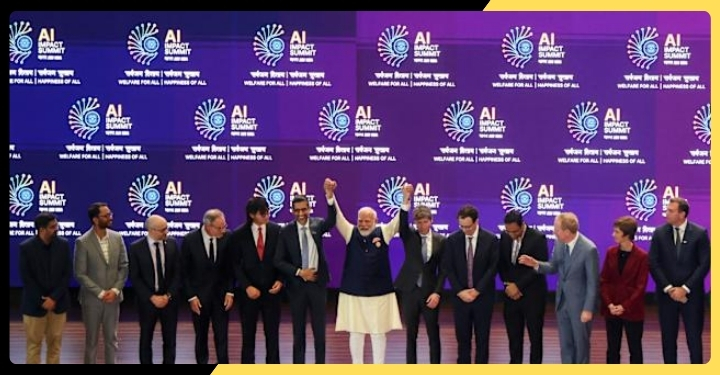
India is placing one of the largest bets in its technological history — a projected $200 billion opportunity in artificial intelligence. At this year’s AI summit, that ambition was on full display. So were the growing pains.
The summit was a spectacle of scale. Government leaders outlined national AI strategies. Venture capitalists predicted a wave of unicorns. Corporate giants announced partnerships. The message was clear: India does not intend to be a bystander in the global AI race.
But between the applause lines and slide decks, cracks appeared.
For startups, the biggest concern was infrastructure. Access to advanced computing power remains limited and expensive. Several founders told me they rely heavily on overseas cloud providers, raising questions about long-term sovereignty and cost control.
Regulation was another source of uncertainty. While officials spoke about “light-touch governance,” entrepreneurs admitted confusion over data rules, compliance expectations, and intellectual property protections for AI-generated outputs.
Yet the summit wasn’t just about obstacles.
India’s strengths are real. The country produces vast numbers of engineers annually. Its digital public infrastructure — from identity systems to payment rails — provides a rich testing ground for applied AI solutions. Companies are already deploying AI in agriculture forecasting, fraud detection, and multilingual customer service.
One standout panel focused on vernacular AI models built specifically for India’s linguistic diversity. Rather than replicating Western systems, these efforts aim to solve uniquely local problems. That strategy could prove to be India’s competitive edge.
Still, ambition sometimes outpaced clarity. The $200 billion projection was frequently cited, but rarely dissected. Would growth come primarily from exports? Domestic adoption? Public sector modernization? The roadmap felt aspirational rather than operational.
The mood oscillated between confidence and impatience. Investors expressed excitement but cautioned about inflated valuations. Policymakers emphasized long-term strategy, while founders sought immediate support.
What emerged was a portrait of a nation in transition. India has the ingredients for AI success: talent, market scale, and political will. But ingredients alone don’t guarantee execution.
The summit felt less like a victory lap and more like a strategic huddle at halftime. The game is still being played. The outcome will depend not on keynote speeches, but on follow-through — infrastructure investment, regulatory clarity, and sustained collaboration between public and private sectors.
India’s AI bet is real. Whether it becomes a defining economic leap or another overhyped promise will depend on what happens after the conference lights dim.
Journalist Details

Latest entries
 Latest NewsApril 1, 2026Social Media News May Soon Fall Under IT Regulations in India
 Latest NewsMarch 26, 2026LPG Booking Rules Remain Unchanged, Confirms Centre
 Latest NewsMarch 24, 2026Train Ticket Cancellations to Cost More: Railways Updates Refund Policy
 Latest NewsMarch 14, 2026After Detention Row, Authorities Drop NSA Charges Against Sonam Wangchuk Following Ladakh Climate Protest