Supreme Court Calls SIR Exercise Crucial For Fair Elections
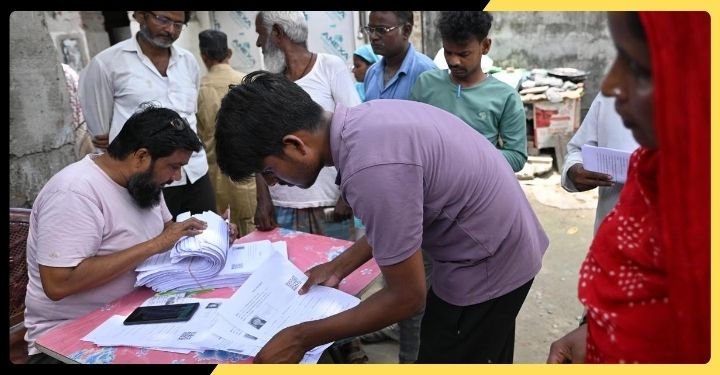
The Supreme Court has upheld the Special Intensive Revision (SIR) exercise and described it as an important mechanism for protecting the integrity of elections in India. The judgment comes amid growing national discussions about electoral reforms and voter verification processes.
According to the apex court, free and fair elections form the foundation of democracy, and accurate electoral rolls are essential for maintaining public confidence in the system. The judges stated that the Election Commission has both the authority and responsibility to ensure that voter lists remain authentic and updated.
The case was brought before the court after several petitions challenged the legality and implementation of the SIR exercise. Petitioners argued that strict verification procedures could disproportionately affect poor and migrant communities that may struggle to provide required documentation.
Despite these objections, the court concluded that the exercise itself serves a legitimate democratic objective. The judges clarified that identifying duplicate or ineligible entries is necessary for preserving the credibility of elections.
The Supreme Court stressed that the Election Commission must implement the process carefully and transparently. Authorities were instructed to provide adequate grievance redressal mechanisms and ensure that no eligible citizen is excluded unfairly.
Election Commission officials defended the revision exercise, saying voter lists must be updated regularly to account for deaths, migration, and changes in residence. Officials maintained that accurate electoral rolls reduce the risk of fraud and strengthen democratic institutions.
Following the verdict, political parties reacted differently. Supporters of the ruling described it as a major endorsement of electoral reforms, while critics expressed concern over possible implementation challenges on the ground.
Legal analysts believe the judgment carries long-term implications for India’s electoral system. The ruling is expected to reinforce the Election Commission’s powers while also increasing accountability regarding voter verification procedures.
The court emphasized that electoral reforms should not compromise citizens’ voting rights. Judges observed that while electoral purity is important, procedural fairness and accessibility must remain central to implementation.
Experts noted that many democracies across the world conduct periodic voter verification exercises to maintain accurate records. India’s scale, however, makes the process more complex due to population mobility and administrative challenges.
The judgment is also being viewed as part of a broader effort to strengthen institutional trust in the electoral process. Analysts say maintaining transparent and reliable voter rolls is crucial for ensuring confidence in election outcomes.
Public awareness is expected to play a major role in the success of the SIR exercise. Authorities have been encouraged to educate citizens about verification procedures and timelines so that eligible voters can avoid unnecessary complications.
As preparations for future elections continue, the Supreme Court’s endorsement of the SIR exercise is likely to shape political and legal discussions surrounding electoral reforms in India for years ahead.
Journalist Details

- Jitendra Kumar is an Indian journalist and social activist from Hathras in Uttar Pradesh is known as the senior journalist and founder of Xpert Times Network Private Limited.
Latest entries
 Bharat StoriesOctober 23, 2026DJ BPM AKA Bhavan Parekh Named Among Best DJ Of 2026 For His Signature Sounds, Global Performances And Being A Complete RIOT On Stage
 Bharat StoriesOctober 22, 2026Deejay Sachin Named Among The Best DJ Of 2026 For His 28 Year Legacy In The Electronic Music Industry
 Latest NewsOctober 20, 2026RSS Chief Urges Protesters to Seek Solutions Rather Than Create Social Divisions
 Bharat StoriesOctober 16, 2026Gurdeep Singh Live Named Among The Best Live Musical Artist Of 2026 For His Remarkable Journey And Musical Legacy Across India