
New Delhi Calls for Dialogue Over Proposed US Tariff to Protect Bilateral Trade
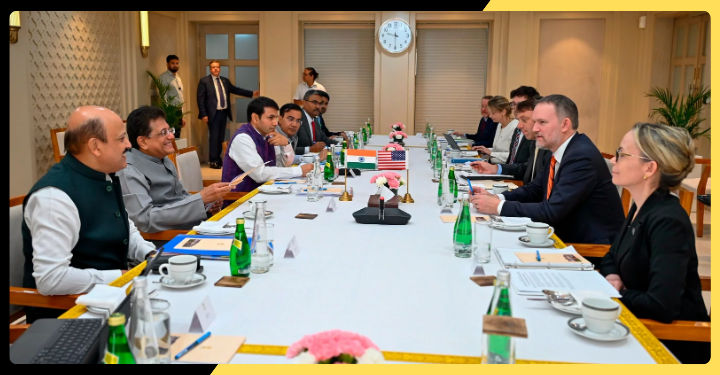
India has renewed its call for meaningful dialogue with the United States after Washington proposed a 12.5% tariff on selected imports, stressing that negotiations offer the most effective route to resolving trade concerns. New Delhi believes that strengthening bilateral discussions will help preserve the momentum of one of the world’s fastest-growing economic partnerships while avoiding measures that could disrupt trade and investment.
Senior Indian officials have highlighted the importance of maintaining an open and rules-based trading system, particularly at a time when the global economy is facing multiple challenges. They argue that additional tariffs could create unnecessary uncertainty for businesses, manufacturers, exporters, and investors who depend on smooth trade flows between the two countries.
Over the past several years, India and the United States have significantly expanded their economic engagement. Bilateral trade has continued to grow across sectors including information technology, pharmaceuticals, engineering goods, textiles, agriculture, chemicals, renewable energy, and advanced manufacturing. The two nations have also increased cooperation in digital technologies, defense production, healthcare, and semiconductor development, making their commercial relationship increasingly important.
The proposed 12.5% tariff has raised concerns among Indian exporters who rely on access to the US market. Industry representatives say higher import duties could reduce the competitiveness of Indian products, making them more expensive for American buyers. This could affect businesses ranging from small and medium-sized enterprises to large exporters with established operations in the United States.
Trade organizations have urged policymakers in both countries to prioritize constructive negotiations instead of imposing additional restrictions. Business leaders believe that long-term economic cooperation requires predictable policies and transparent regulations. They argue that open dialogue can address trade disputes more effectively than unilateral tariff measures.
Indian officials have reportedly informed their US counterparts that both countries have successfully resolved trade disagreements through diplomacy in the past. They remain optimistic that the current issue can also be settled through continued engagement, allowing both governments to focus on expanding trade rather than limiting it.
Experts note that India and the United States have become increasingly interconnected through global supply chains. Many American companies source products, components, and services from India, while Indian businesses have expanded investments in the US market. Higher tariffs could therefore have consequences for companies on both sides, potentially increasing production costs and affecting pricing for consumers.
Economists also point out that businesses value certainty when making long-term investment decisions. Sudden policy changes, including new tariffs, may encourage companies to delay expansion plans or reconsider supply chain strategies. Stable trade policies, by contrast, create confidence and encourage greater investment, innovation, and employment.
India has consistently emphasized that stronger economic ties with the United States remain a strategic priority. Both governments have launched several initiatives aimed at increasing collaboration in critical technologies, clean energy, infrastructure development, digital commerce, and manufacturing. These partnerships are expected to play a significant role in driving future economic growth and enhancing global competitiveness.
Industry groups have welcomed India’s decision to seek bilateral negotiations rather than adopting a confrontational approach. They believe that discussions covering tariffs, market access, customs procedures, regulatory standards, and investment opportunities can produce outcomes that benefit businesses in both countries. Many exporters have expressed confidence that diplomacy will help protect existing trade relationships.
The latest developments also highlight the broader importance of India-US economic cooperation in a rapidly changing global environment. As companies diversify supply chains and governments seek resilient trade partnerships, closer collaboration between New Delhi and Washington has become increasingly valuable. Strengthening commercial ties can support innovation, improve market access, and generate new employment opportunities across multiple industries.
As discussions continue, policymakers from both countries are expected to remain engaged in finding practical and balanced solutions. While differences over the proposed tariff remain under consideration, officials have reaffirmed their commitment to dialogue and mutually beneficial cooperation. Businesses, investors, and trade experts will closely monitor the negotiations, hoping they result in an agreement that promotes growth, strengthens bilateral trade, and reinforces the long-term strategic partnership between India and the United States.
Journalist Details

- Jitendra Kumar is an Indian journalist and social activist from Hathras in Uttar Pradesh is known as the senior journalist and founder of Xpert Times Network Private Limited.
Latest entries
 BusinessAugust 31, 2026Family Says Justice Is Incomplete After Two Suspected Ankit Balyan Killers Die in Encounter
 Latest NewsAugust 27, 2026What Happened in Kanpur? DGCA Probe Begins After Fatal Training Aircraft Crash
 Latest NewsAugust 26, 2026Nepal Flash Floods Wreak Havoc Near Tibet Border, Roads and Bridges Washed Away
 Bharat StoriesAugust 26, 2026DJ Vaishal INDIA: Redefining the Art of Musical Journeys in India in 2026