
What Happened in Kanpur? DGCA Probe Begins After Fatal Training Aircraft Crash
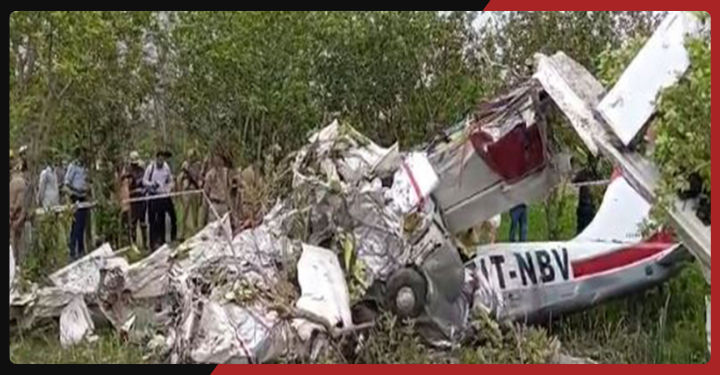
The Directorate General of Civil Aviation is investigating a fatal training aircraft crash in Kanpur that killed both pilots aboard the aircraft on Thursday. The aircraft crashed near the Ganga Barrage, and officials are now working to establish what caused the accident.
The aircraft was a twin-engine Tecnam P2006T operated by Garg Aviation. It carried two people — an instructor pilot and a trainee pilot. Both died after the aircraft crashed into a field near Nathupurwa village.
The crash occurred during what authorities described as a training sortie. The aircraft, bearing registration VT-NBV, was severely damaged when it struck the ground. Police and emergency personnel reached the location after receiving information about the accident.
Investigators now face the difficult task of reconstructing the aircraft’s final moments. The first priority in any aviation accident investigation is to establish facts rather than assumptions. That means examining the wreckage, identifying the condition of major components and determining the aircraft’s operational history.
One of the central questions will be whether the aircraft experienced a mechanical or technical problem. Investigators will examine the engines, propellers, flight-control systems and other components for signs of failure. They will also review maintenance records to determine whether required inspections and servicing had been completed.
Another area of investigation will be the flight itself. Investigators may examine the aircraft’s planned training activity and determine what manoeuvres were being conducted before the accident. If flight tracking or other records are available, they could help establish the aircraft’s altitude, speed and route.
Communication records could also be important. Any communication between the aircraft and ground personnel could reveal whether the pilots reported a problem before the crash.
Weather conditions are another factor investigators may consider. However, no official report has identified weather as a cause of the accident. It would therefore be premature to attribute the crash to visibility, wind or any other weather-related factor.
Pilot performance will also be examined as part of the standard investigation process. This does not mean investigators have concluded that pilot error occurred. Rather, investigators need to understand the actions and circumstances leading to the crash before reaching any conclusion.
The presence of an instructor makes the accident particularly significant from a training perspective. Instructors supervise trainees and are responsible for maintaining safe operating conditions during instructional flights.
The crash also raises questions because the aircraft involved had been part of a previous incident in Kanpur. In June, a trainee pilot was injured by the aircraft’s running propeller after a night instructional flight at Chakeri Airport. The DGCA investigated that incident.
However, there is currently no confirmed evidence linking that incident to the fatal crash. Investigators will have to establish whether any maintenance or operational history is relevant.
Aviation accident investigations can take time because investigators must collect and analyse evidence before issuing conclusions. Initial information released immediately after an accident can change as officials verify facts.
That happened with early reporting of Thursday’s Kanpur crash. Some initial reports said one pilot had died while the other was seriously injured. Later reports from police and aviation sources confirmed that both pilots had died.
The changing information illustrates why developing aviation stories require careful verification.
For now, the most important unanswered question remains the cause of the crash. Once investigators establish the sequence of events, authorities may be able to identify whether additional safety measures are necessary.
The investigation will also be important for India’s flight-training sector. Flying schools depend on reliable aircraft, qualified instructors and strict maintenance and operational standards. A fatal accident can have consequences beyond the immediate loss of life because it can prompt regulators to review procedures across the sector.
The Kanpur crash has therefore become both a human tragedy and an aviation-safety investigation. The loss of the instructor and trainee pilot has left two families grieving, while the aviation authorities now have the responsibility of determining exactly what happened.
Until the DGCA investigation provides further evidence, the cause of the crash remains unconfirmed.
Journalist Details

- Jitendra Kumar is an Indian journalist and social activist from Hathras in Uttar Pradesh is known as the senior journalist and founder of Xpert Times Network Private Limited.
Latest entries
 Bharat StoriesOctober 16, 2026Gurdeep Singh Live Named Among The Best Live Musical Artist Of 2026 For His Remarkable Journey And Musical Legacy Across India
 Latest NewsOctober 16, 2026Why Abhijeet Dipke Is Willing to Risk Arrest in CJP’s Fight Over Electoral Reforms
 Bharat StoriesOctober 14, 2026Aryan Minocha From Delhi Named Best Anchor Of The Year 2026 For His Remarkable Journey Across Celebrity Events And Luxury Celebration
 NewsOctober 14, 2026More Than 33 Lakh Voters Flagged as Delhi’s Electoral Revision Faces Questions