From Launch Pad to Marketplace: The Business Hurdles Facing Skyroot After Vikram-1
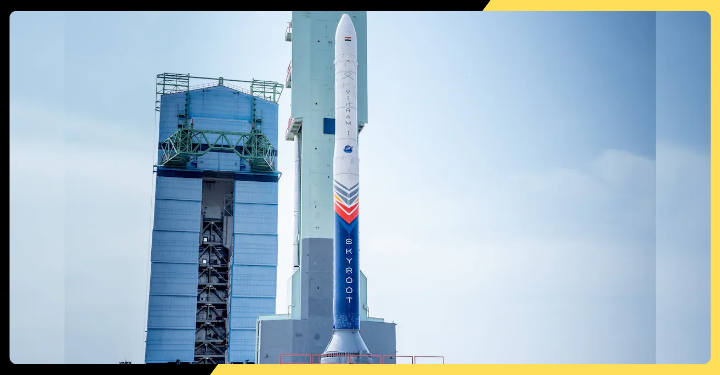
Skyroot Aerospace has entered a new era with the successful orbital launch of Vikram-1, a milestone that has strengthened India’s position in the global private space industry. The achievement demonstrates that an Indian startup can design, manufacture, and launch an orbital-class rocket using advanced engineering and innovative technologies. While the successful mission is a major technological breakthrough, it also marks the beginning of a far more difficult journey. The company must now transition from being a rocket developer to becoming a commercially successful aerospace business capable of generating consistent revenue and competing with established global launch providers.
For any private space company, building a rocket is only part of the challenge. Turning that rocket into a profitable business requires a completely different set of skills. Commercial success depends on attracting customers, maintaining a regular launch schedule, controlling manufacturing costs, ensuring mission reliability, and adapting to changing market demands. Skyroot’s future will be determined not just by its engineering expertise but by its ability to execute a strong long-term business strategy.
One of the most immediate challenges is securing commercial launch contracts. Satellite operators have numerous launch providers to choose from, including well-established companies with years of operational experience. Customers seek assurance that their satellites will reach orbit safely and on time because launch failures can result in significant financial losses. As a relatively new entrant, Skyroot must build customer confidence by demonstrating consistent mission success across multiple launches.
The global demand for satellite launches continues to grow, creating opportunities for companies like Skyroot. Small satellites have become increasingly popular due to advances in miniaturization and lower manufacturing costs. These satellites are used for communication, weather forecasting, Earth observation, navigation, environmental monitoring, agriculture, and defense applications. As governments and private organizations launch larger satellite constellations, the need for dedicated launch services is expected to increase significantly.
Skyroot’s Vikram series has been designed to serve this expanding market. Dedicated launch vehicles allow customers to select their preferred launch windows and orbital destinations without relying on rideshare missions. This flexibility offers an important competitive advantage, particularly for time-sensitive commercial and scientific missions. However, converting market demand into signed contracts requires effective marketing, strong customer relationships, and a proven operational record.
Competition remains one of the company’s biggest obstacles. The commercial launch industry includes experienced companies that have successfully completed dozens or even hundreds of missions. Many competitors have invested heavily in reusable rocket technology, which significantly lowers launch costs by allowing rocket components to be flown multiple times. Although reusable systems require substantial upfront investment, they offer long-term economic advantages that are reshaping the industry’s competitive landscape.
Skyroot currently focuses on cost-efficient expendable launch vehicles built using advanced manufacturing methods such as 3D printing and lightweight composite materials. These technologies reduce production complexity and shorten manufacturing timelines. Nevertheless, the company must continue investing in research and development to remain competitive as launch technologies evolve.
Financial sustainability is another critical issue. Space companies require substantial capital not only to develop rockets but also to expand production facilities, conduct testing, improve launch infrastructure, and recruit highly skilled engineers. Even after a successful orbital mission, continuous investment is essential to maintain technological leadership and support future product development. Investors will increasingly evaluate Skyroot based on its revenue growth, profitability, customer acquisition, and operational efficiency rather than technological achievements alone.
Scaling production presents another significant challenge. A single successful launch demonstrates technical capability, but commercial success requires the ability to manufacture rockets consistently and efficiently. As customer demand grows, Skyroot must establish a reliable supply chain capable of delivering high-quality components on schedule. Delays in sourcing critical materials or manufacturing defects could affect launch schedules and customer confidence.
India’s supportive policy environment provides an important advantage. Government reforms encouraging private participation in the space sector have opened access to testing facilities, launch infrastructure, and regulatory support. These initiatives have created favorable conditions for startups while attracting domestic and international investment into India’s growing space ecosystem. Continued collaboration between private companies and national space institutions could accelerate innovation and strengthen the country’s global competitiveness.
Skyroot also has opportunities to diversify beyond launch services. Satellite integration, mission planning, orbital deployment, spacecraft propulsion systems, and future in-space logistics services represent promising areas for business expansion. Offering end-to-end mission solutions could increase customer loyalty while generating additional revenue streams beyond rocket launches.
International expansion should also remain a strategic priority. Many emerging economies are investing in satellite programs but lack domestic launch capabilities. By offering reliable, affordable, and flexible launch services, Skyroot could establish itself as a preferred partner for governments, universities, research institutions, and commercial satellite operators worldwide.
Another factor that will influence Skyroot’s long-term success is talent development. The aerospace industry depends on highly specialized engineers, software developers, propulsion experts, materials scientists, and manufacturing professionals. As the company grows, attracting and retaining skilled employees will become increasingly important. Investment in workforce development, innovation, and organizational culture will play a vital role in sustaining technological excellence.
The successful Vikram-1 mission has given Skyroot Aerospace global visibility and established its credibility as a serious player in the commercial launch industry. However, history shows that technological breakthroughs alone rarely guarantee business success. The company’s future will depend on its ability to execute commercially, maintain operational excellence, expand its customer base, and continuously innovate in a rapidly changing market.
From the launch pad to the global marketplace, Skyroot now faces its most demanding mission. If it successfully overcomes these business hurdles, the company could become one of the defining success stories of India’s private space revolution and a major contributor to the country’s ambitions in the global space economy.
Journalist Details

- Jitendra Kumar is an Indian journalist and social activist from Hathras in Uttar Pradesh is known as the senior journalist and founder of Xpert Times Network Private Limited.
Latest entries
 Latest NewsSeptember 19, 2026From Steel Cutting to Keel Laying: Indian Navy’s First NGMV Moves Ahead at Cochin Shipyard
 Latest NewsSeptember 18, 2026More Than 50 CCTV Cameras Examined In Delhi Teen Murder Investigation
 Bharat StoriesSeptember 18, 2026DJ VIX: The London Born Indian DJ Bringing Three Decades Of Global Experience To The World Of Luxury Celebrations In 2026
 NewsSeptember 16, 2026Mecca Security on Alert After Saudi Forces Shoot Down Houthi Drone