
Police Block Parliament March as Cockroach Movement Gains National Attention
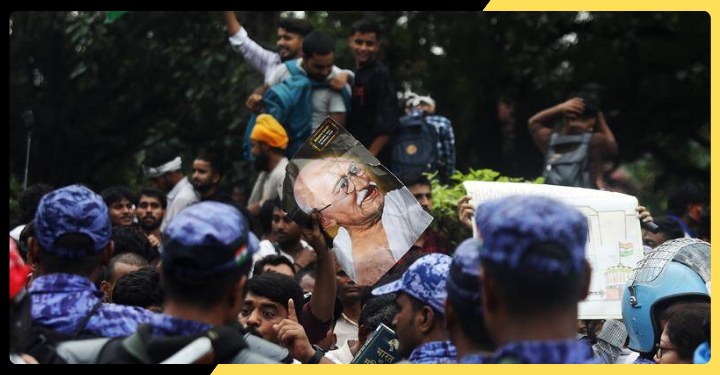
A planned march toward Parliament by supporters of the fictional “Cockroach Movement” was halted by police in central New Delhi on Monday after demonstrators reached a security checkpoint established near the Parliament complex. The peaceful gathering attracted participants from across the country and generated widespread public discussion about civic participation and democratic engagement.
Supporters began assembling shortly after sunrise at a designated protest venue, where volunteers registered participants, distributed informational pamphlets, and briefed attendees on safety guidelines. Organizers repeatedly stressed that the demonstration was intended to remain peaceful and that participants should comply with instructions from law enforcement officials throughout the day.
Many protesters carried banners and placards displaying messages calling for increased transparency, accountability, and stronger communication between citizens and public institutions. Others waved flags representing the movement while chanting slogans in support of their campaign.
Delhi Police deployed a large number of personnel around Parliament and other sensitive government buildings before the march began. Security arrangements included barricades, traffic diversions, surveillance cameras, and designated pedestrian routes designed to ensure public safety while allowing the demonstration to proceed within approved limits.
Police officials said the additional measures were part of standard security procedures whenever large public gatherings take place near important government institutions. Officers also appealed to commuters to plan alternate travel routes because temporary road closures were expected during the event.
By mid-morning, organizers led the crowd onto the approved procession route. Volunteers wearing reflective jackets walked alongside participants, helping maintain order and reminding demonstrators to avoid blocking emergency vehicles or damaging public property. The atmosphere remained calm as protesters advanced through central Delhi under police supervision.
As the procession approached Parliament, officers stopped the march at a series of security barricades erected several hundred meters from the restricted zone. Senior police officials informed organizers that participants would not be permitted to continue because existing regulations prohibited unauthorized public gatherings near the Parliament complex.
Movement representatives held discussions with police commanders for several minutes in an effort to negotiate closer access. Following the meeting, organizers announced that they would respect the restrictions and avoid any attempt to breach the barricades.
Instead, demonstrators gathered peacefully near the checkpoint while movement leaders addressed the crowd using portable loudspeakers. Speakers thanked participants for maintaining discipline and emphasized that the campaign’s message could be delivered without confrontation.
A delegation representing the movement later submitted a written memorandum through official government channels. The document outlined the group’s concerns and requested that policymakers consider opening broader public consultations on issues affecting citizens.
Throughout the afternoon, volunteers distributed drinking water and assisted elderly participants. Medical teams stationed nearby treated a handful of people for dehydration and minor exhaustion due to warm weather conditions. Authorities confirmed that no serious injuries or major disturbances occurred during the demonstration.
Traffic police diverted vehicles around the protest area, resulting in temporary delays on several major roads. Public transportation continued operating with minor route adjustments, and officials gradually reopened affected streets after the demonstration concluded.
The event attracted attention from journalists, local residents, and visitors, many of whom observed the rally from nearby public areas. Some praised both organizers and police for maintaining a peaceful atmosphere, while others expressed hope that future public demonstrations would continue balancing the right to protest with the need to minimize disruptions.
Political commentators noted that peaceful public demonstrations remain an important feature of democratic societies. They observed that constructive engagement between citizens, public officials, and elected representatives can help foster dialogue even when differing opinions exist.
As evening approached, organizers formally concluded the rally and encouraged supporters to leave the area in an orderly manner. Volunteers collected litter and dismantled temporary facilities before departing.
Police later confirmed that the gathering ended without arrests related to violence or property damage. Movement representatives described the day as a meaningful opportunity to raise public awareness, despite being unable to complete the planned march to Parliament.
The fictional demonstration concluded peacefully, highlighting the importance of lawful public assembly, respectful dialogue, and cooperation between citizens and authorities during large civic events.
Journalist Details

Latest entries
 NewsSeptember 20, 2026Mumbai Coastal Road Tragedy: BMW Crashes Through Barrier, Three Young Lives Lost
 Latest NewsSeptember 17, 2026Aaditya Thackeray Denies Disha Salian Link as Father Issues Rs 500 Crore Notice
 Latest NewsSeptember 14, 2026‘I Felt Unsafe’: Gurugram Woman Biker’s Road Rage Ordeal Caught on Video
 Latest NewsSeptember 7, 2026‘Criticism Is Fine, Insults Are Not’: Vijay Redefines the Limits of Political Speech