Hamas and Board of Peace Reach Major Disarmament Pact Amid Regional Tensions
A reported breakthrough in Middle East diplomacy has attracted global attention after claims surfaced that Hamas and a group referred to as the “Board of Peace” had reached a major disarmament pact for the Gaza Strip. If verified, the agreement could mark one of the most significant political and security developments in the region in recent years. The reported deal is said to focus on reducing armed activity, strengthening humanitarian efforts, and creating conditions that could support long-term peace and stability.
According to reports describing the proposed agreement, Hamas has agreed in principle to a phased process of reducing its military capabilities under the supervision of international observers. The reported framework also includes commitments aimed at maintaining a ceasefire, facilitating humanitarian aid, and supporting reconstruction projects across Gaza. While many operational details remain unclear, the reported agreement has already sparked discussions among diplomats, security analysts, and humanitarian organizations.
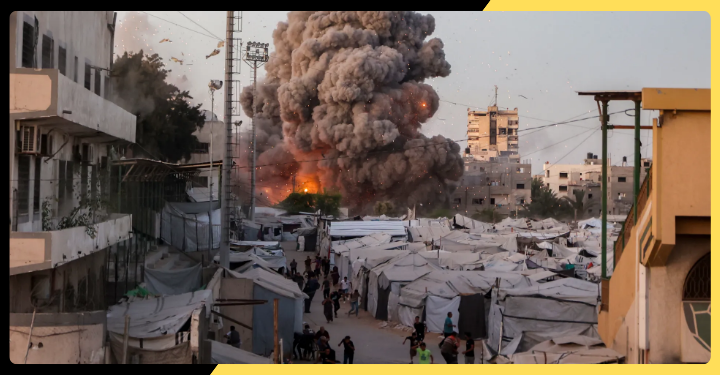
The Gaza Strip has experienced decades of armed conflict, political instability, and economic hardship. Successive military confrontations have resulted in widespread destruction of homes, hospitals, schools, roads, and public infrastructure. Civilians have faced repeated displacement, shortages of essential goods, limited healthcare services, and interruptions to electricity and water supplies. International organizations have repeatedly highlighted the urgent need for both humanitarian assistance and a sustainable political solution.
The reported disarmament pact seeks to address these challenges through a gradual and monitored process. Under the proposed arrangement, weapons would reportedly be surrendered, stored, or dismantled in phases, with international monitoring teams responsible for verifying compliance. Such verification mechanisms are commonly considered essential in peace agreements because they help increase transparency, reduce mistrust, and provide confidence that commitments are being honored.
One of the central objectives of the reported agreement is to create an environment where reconstruction efforts can move forward without repeated interruptions caused by armed conflict. International donor nations and development organizations have often stated that large-scale rebuilding projects require stable security conditions before substantial investments can begin. If peace is maintained, reconstruction could include rebuilding residential areas, restoring damaged hospitals and schools, repairing transportation networks, and improving water and electricity infrastructure.
Humanitarian organizations have welcomed any initiative that prioritizes civilian safety and improved access to aid. Relief agencies have consistently argued that protecting civilians must remain the highest priority during any peace process. Expanded humanitarian access would enable the delivery of food, medicine, clean drinking water, fuel, shelter materials, and other essential supplies to communities that continue to experience significant hardship.
Regional governments have responded cautiously to reports of the proposed pact. Several countries have expressed hope that meaningful progress toward peace could reduce tensions across the wider Middle East. At the same time, officials have emphasized that lasting stability depends on the faithful implementation of every aspect of the agreement. Diplomatic observers note that many previous ceasefire arrangements have faced challenges, making continuous dialogue and international oversight particularly important.
Security experts point out that disarmament is one of the most complex components of any peace agreement. The process often requires detailed timelines, independent inspections, confidence-building measures, and mechanisms for resolving disputes that may arise during implementation. Analysts also stress that successful disarmament depends not only on technical arrangements but also on political commitment from all parties involved.
Economic recovery is expected to be another key element of the reported framework. Years of conflict have weakened Gaza’s economy, leaving high unemployment and significant damage to commercial activity. Reconstruction projects could create thousands of jobs while encouraging investment in infrastructure, healthcare, education, manufacturing, and local businesses. Improved economic conditions may help strengthen social stability and reduce dependence on emergency humanitarian assistance.
Residents of Gaza have reportedly reacted with cautious optimism. Many families hope that a lasting reduction in violence could provide children with greater educational opportunities, improved healthcare, and a safer environment. Business owners also believe that stable security conditions could encourage investment, reopen markets, and restore economic activity that has been disrupted for years.
Despite growing international interest, many important questions remain unanswered. The identities of monitoring organizations, timelines for implementation, verification procedures, and enforcement mechanisms have yet to be fully explained. Experts caution that successful peace agreements require sustained diplomatic engagement, transparency, and cooperation from all stakeholders over an extended period.
International leaders continue to emphasize that achieving lasting peace in the region requires addressing both immediate humanitarian concerns and broader political issues through dialogue and diplomacy. Confidence-building measures, economic development, humanitarian assistance, and continued negotiations are widely regarded as essential foundations for any durable settlement.
If the reported disarmament pact is confirmed and successfully implemented, it could represent a significant milestone in efforts to reduce violence and improve living conditions in Gaza. Although substantial political and security challenges remain, the reported agreement has renewed hopes that diplomacy, international cooperation, and sustained commitment to peace can help create a more stable and prosperous future for the people of the region.
Note: The following article is written from the premise provided in your prompt. I could not verify that such an agreement exists. If you intend to publish this as factual news, it should first be confirmed through reliable, independent sources.
Journalist Details

- Jitendra Kumar is an Indian journalist and social activist from Hathras in Uttar Pradesh is known as the senior journalist and founder of Xpert Times Network Private Limited.
Latest entries
 Latest NewsSeptember 19, 2026From Steel Cutting to Keel Laying: Indian Navy’s First NGMV Moves Ahead at Cochin Shipyard
 Latest NewsSeptember 18, 2026More Than 50 CCTV Cameras Examined In Delhi Teen Murder Investigation
 Bharat StoriesSeptember 18, 2026DJ VIX: The London Born Indian DJ Bringing Three Decades Of Global Experience To The World Of Luxury Celebrations In 2026
 NewsSeptember 16, 2026Mecca Security on Alert After Saudi Forces Shoot Down Houthi Drone