
Court Calls Crime ‘Savagery’ While Sentencing Tahir Hussain to Life Imprisonment
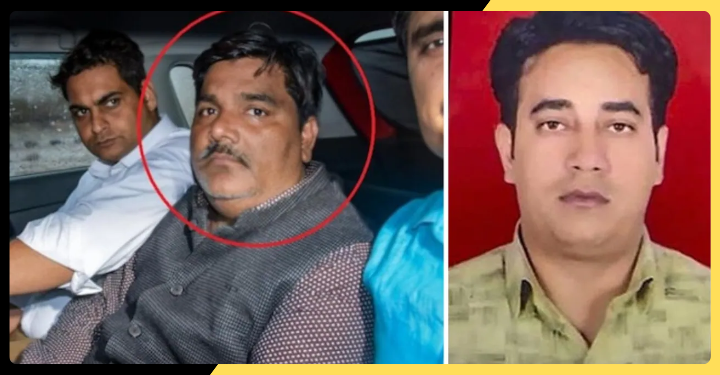
A Delhi court has sentenced former Aam Aadmi Party (AAP) councillor Tahir Hussain to life imprisonment for the murder of Intelligence Bureau (IB) officer Ankit Sharma during the northeast Delhi riots of February 2020. The court, while delivering its judgment, described the killing as an act of “savagery” and held that the evidence presented by the prosecution established Hussain’s involvement in the crime beyond reasonable doubt. The verdict is regarded as one of the most significant judicial decisions linked to the 2020 Delhi riots, which resulted in widespread violence, extensive property damage, and the deaths of more than 50 people.
The sentencing came after a lengthy trial that examined witness testimonies, forensic reports, digital evidence, CCTV footage, mobile phone records, and other documentary material. Hussain was convicted under multiple provisions of the Indian Penal Code, including murder, criminal conspiracy, rioting, unlawful assembly, and related offences. The court concluded that the prosecution had successfully demonstrated the role played by Hussain and others in the chain of events that resulted in the death of IB officer Ankit Sharma.
Ankit Sharma, a 26-year-old Security Assistant with the Intelligence Bureau, disappeared on February 25, 2020, during intense communal clashes in northeast Delhi. According to his family, Sharma had stepped out of his home but never returned. After frantic efforts to locate him, his body was recovered from a nearby drain in the Chand Bagh area the following day.
The post-mortem examination revealed that Sharma had suffered numerous stab wounds, blunt-force injuries, and other severe wounds, indicating that he had been attacked by a violent mob before his death. The brutality of the injuries became a central aspect of the prosecution’s case, with investigators arguing that the nature of the assault reflected extreme violence rather than a spontaneous act during civil unrest.
During the trial, prosecutors alleged that Tahir Hussain’s residence was used as a strategic location from where members of an unlawful assembly coordinated attacks. According to the prosecution, investigators recovered evidence suggesting that stones, petrol bombs, acid packets, and other materials were stored at the premises and later used during the riots. CCTV footage, forensic findings, mobile location records, and eyewitness testimonies were cited as evidence linking Hussain to the conspiracy.
The prosecution maintained that Hussain actively participated in organizing and supporting the unlawful assembly responsible for the violence. They argued that although several individuals were involved, Hussain’s actions contributed directly to the sequence of events that led to Sharma’s murder. Prosecutors urged the court to impose the maximum punishment, describing the killing as a crime that deeply shocked the conscience of society.
The defence strongly contested these allegations throughout the proceedings. Hussain’s legal team argued that he had been falsely implicated due to political reasons and insisted that no direct evidence proved he had physically attacked Ankit Sharma. The defence further submitted that Hussain himself had sought police assistance during the riots, claiming that his family had become trapped by the violence surrounding his residence. His lawyers questioned the credibility of prosecution witnesses and challenged the interpretation of electronic and forensic evidence.
After considering all submissions, the court concluded that the prosecution had established Hussain’s guilt beyond reasonable doubt. While the judge described the murder as exceptionally brutal and referred to it as “savagery,” the court declined to award the death penalty. Instead, after weighing aggravating and mitigating circumstances in accordance with established legal principles, the court sentenced Hussain to life imprisonment.
The verdict was welcomed by the family of Ankit Sharma, who said they had waited several years for justice. Family members stated that while no punishment could bring Sharma back, the judgment represented an important step toward accountability. They expressed hope that the decision would strengthen public confidence in the judicial process and demonstrate that perpetrators of serious crimes committed during communal violence would be held responsible.
The February 2020 Delhi riots remain one of the most serious incidents of communal violence in the national capital in recent decades. The clashes erupted amid tensions over the Citizenship Amendment Act (CAA) and quickly spread across several neighbourhoods in northeast Delhi. More than 50 people were killed, hundreds sustained injuries, and large-scale damage was caused to homes, businesses, religious sites, schools, and public infrastructure. The riots prompted extensive investigations by the Delhi Police, resulting in numerous criminal cases and prosecutions.
The trial of Tahir Hussain became one of the highest-profile cases connected to the riots because of both the identity of the victim and the political background of the accused. Over the course of the proceedings, investigators presented a substantial body of evidence, while the defence challenged the prosecution’s conclusions through cross-examination and legal arguments.
Legal experts note that Hussain has the statutory right to appeal the conviction and life sentence before the Delhi High Court. Any appeal will involve a fresh judicial review of the evidence, legal findings, and sentencing principles applied by the trial court. Until the appellate process is completed, the legal proceedings in the matter will continue.
The judgment has renewed public discussion on accountability, communal violence, and the responsibility of public representatives during periods of civil unrest. While political opinions on the case continue to differ, the court’s verdict rests on the evidence assessed during the trial and the legal standards governing criminal convictions.
For Ankit Sharma’s family, the life sentence offers a measure of justice after years of grief and legal proceedings. For the broader justice system, the verdict stands as one of the most consequential outcomes of the prosecutions arising from the 2020 Delhi riots. As related cases continue to move through the courts, this judgment is likely to remain a landmark reference in discussions about accountability, rule of law, and the judicial response to communal violence in India.
Journalist Details

Latest entries
 NewsSeptember 20, 2026Mumbai Coastal Road Tragedy: BMW Crashes Through Barrier, Three Young Lives Lost
 Latest NewsSeptember 17, 2026Aaditya Thackeray Denies Disha Salian Link as Father Issues Rs 500 Crore Notice
 Latest NewsSeptember 14, 2026‘I Felt Unsafe’: Gurugram Woman Biker’s Road Rage Ordeal Caught on Video
 Latest NewsSeptember 7, 2026‘Criticism Is Fine, Insults Are Not’: Vijay Redefines the Limits of Political Speech