Women Reporters, VVIP Security and Serious Assault Claims: What Happened in Saket?
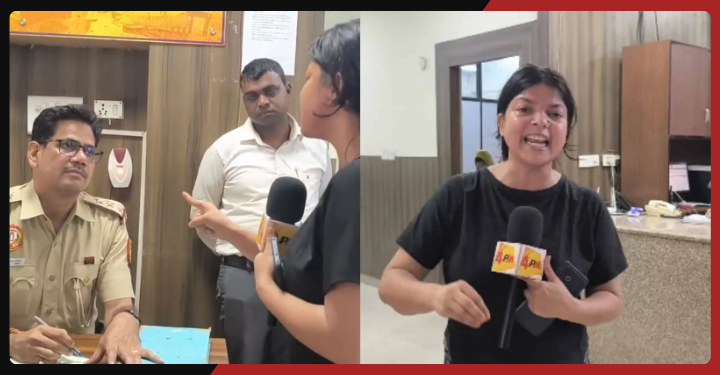
New Delhi: A high-profile event involving top political leaders has turned into the centre of a major controversy after two women journalists alleged that Delhi Police detained and assaulted them while they were covering the programme.
The incident reportedly took place near a hospital event in South Delhi’s Saket area attended by Delhi Chief Minister Rekha Gupta and Union Home Minister Amit Shah. Heavy security arrangements were reportedly in place because of the presence of senior leaders.
Journalists Shaheen Khan and Nafisa Khan had reportedly gone to cover the event. According to their allegations, they attempted to report from the location and raise questions before being stopped by police personnel.
The women alleged that they were taken to Saket Police Station, where they were physically assaulted. Their claims were later supported, in the public debate, by videos and images showing apparent injury marks.
The controversy became more serious when the journalists alleged that the treatment worsened after police officers learned they were Muslims.
Their account has triggered outrage among media organisations and opposition political leaders. Several journalist bodies demanded a transparent investigation and accountability for any officials found responsible.
The incident also raises an important question about the balance between security and journalism.
VVIP security is a highly sensitive responsibility. Police officers are required to protect political leaders and maintain secure movement routes. During such events, access restrictions can be strict.
However, journalists also have a legitimate responsibility to report from public events involving elected leaders. The ability of reporters to observe, question and document events is central to the functioning of a free press.
When security personnel and journalists come into conflict, the situation can quickly become controversial. The Saket incident is now being viewed through exactly this lens.
Delhi Police has rejected the allegations of assault. Officials said the claims were factually incorrect and misleading. According to the police, the women allegedly obstructed the VVIP route and were taken to the police station for inquiry.
Police have denied that the women were beaten because they asked questions or because of their religious identity.
The opposing versions make independent verification essential.
If CCTV footage exists at the event location or inside relevant areas of the police station, it could help establish the sequence of events. Statements from police officers, witnesses and other people present could also provide important evidence.
The controversy has attracted attention because it involves three sensitive issues at once: police conduct, press freedom and religious discrimination.
Women journalists often work under difficult circumstances, especially while reporting from protests, crime scenes and politically sensitive locations. Media organisations have argued that female reporters must receive adequate protection and should never face violence while performing legitimate professional duties.
The alleged religious targeting has added another layer to public concern. If investigators find evidence that religious identity influenced official conduct, it would raise serious constitutional and institutional questions.
At present, however, the allegations remain disputed because Delhi Police has denied them.
The next steps taken by authorities will therefore be closely watched. A credible investigation could help determine whether any misconduct occurred and whether disciplinary or legal action is required.
The case also demonstrates the importance of institutional transparency. Public confidence increases when serious allegations against powerful institutions are investigated fairly rather than ignored.
For the two journalists, the incident has become a deeply personal allegation of mistreatment. For the wider media community, it has become a question of whether journalists can safely perform their work around powerful political institutions.
The Saket controversy is far from just a local incident. It has opened a larger national conversation about the limits of police authority, the rights of journalists and the responsibility of institutions to protect every citizen equally.
Journalist Details

- Jitendra Kumar is an Indian journalist and social activist from Hathras in Uttar Pradesh is known as the senior journalist and founder of Xpert Times Network Private Limited.
Latest entries
 Crime NewsSeptember 4, 2026Women Reporters, VVIP Security and Serious Assault Claims: What Happened in Saket?
 Latest NewsSeptember 1, 2026PM Modi Puts Terrorism at Centre Stage During High-Profile SCO Address
 BusinessAugust 31, 2026Family Says Justice Is Incomplete After Two Suspected Ankit Balyan Killers Die in Encounter
 Latest NewsAugust 27, 2026What Happened in Kanpur? DGCA Probe Begins After Fatal Training Aircraft Crash