MEA’s Meme Post Sparks Global Attention While Reinforcing India’s Position on Jammu & Kashmir
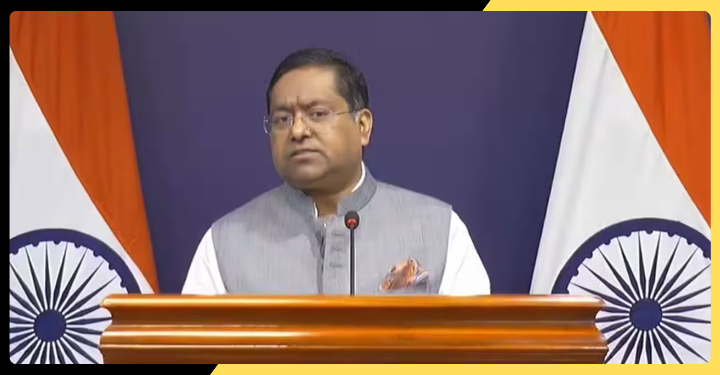
India’s Ministry of External Affairs (MEA) has captured widespread attention by embracing an unconventional communication strategy—using a viral internet meme to reaffirm the country’s official position on Jammu & Kashmir (J&K) and Ladakh. The move reflects the growing importance of digital diplomacy, where governments increasingly use social media to communicate with domestic and international audiences in ways that are engaging, accessible, and widely shareable.
The meme, posted through the Ministry’s official social media channels, combined humour with a clear diplomatic message. While its presentation was light-hearted, its purpose was serious: to reiterate that Jammu & Kashmir and Ladakh are integral parts of India and that the country’s position on these territories remains unchanged. The post quickly gained traction online, generating discussions across digital platforms and attracting attention from journalists, foreign policy experts, and social media users.
The rapid spread of the meme illustrates how communication has evolved in the digital era. Traditional diplomatic statements often reach limited audiences, whereas visual content shared on social media can circulate globally within minutes. Governments around the world are increasingly recognising that public diplomacy is no longer confined to official meetings or press conferences. Instead, online platforms have become influential spaces where national narratives are shaped and public opinion is influenced.
India has consistently maintained that Jammu & Kashmir and Ladakh are inseparable parts of the country. Following the constitutional changes introduced in August 2019, which reorganised the erstwhile state of Jammu & Kashmir into the Union Territories of Jammu & Kashmir and Ladakh, the Government of India has repeatedly described the decision as an internal matter. Officials have emphasised that questions relating to the country’s territorial integrity are not open to external negotiation.
Against this backdrop, the MEA’s meme serves as a modern extension of India’s long-standing diplomatic messaging. Rather than issuing another formal statement, the Ministry chose a communication style familiar to millions of internet users. This reflects a broader understanding that effective public communication today requires adapting to changing media consumption habits.
Memes have become one of the most powerful forms of digital communication because they combine simplicity, humour, and visual storytelling. They often communicate complex ideas within seconds, making them highly effective on fast-moving social media platforms. Governments, international organisations, and public institutions across the world have increasingly adopted similar formats to promote awareness campaigns, explain policies, and engage younger audiences.
Communication specialists argue that the success of such content lies in its ability to simplify official messaging without altering its meaning. In the case of the MEA, the meme retained the government’s formal position while presenting it in a way that encouraged widespread engagement. Thousands of users shared, commented on, and discussed the post, significantly extending the reach of India’s official message.
The initiative also reflects the growing challenge of combating misinformation online. In today’s digital environment, inaccurate maps, edited images, and misleading geopolitical claims can spread rapidly across platforms. Governments often find themselves responding to false information before it shapes public perception. By proactively creating engaging official content, institutions can provide accurate information while reducing the impact of misleading narratives.
Experts in international relations believe digital diplomacy has become an essential pillar of foreign policy. While official negotiations continue through embassies, bilateral meetings, and international organisations, governments also recognise the importance of communicating directly with citizens and global audiences through digital channels. Public diplomacy increasingly involves not only explaining policy but also building trust and credibility online.
India’s Ministry of External Affairs has steadily strengthened its digital presence over recent years. Beyond diplomatic announcements, it regularly shares updates on international visits, humanitarian assistance, evacuation missions, passport services, and cultural initiatives. The latest meme demonstrates the Ministry’s willingness to adopt contemporary communication techniques while remaining consistent with official policy.
The response to the post has been significant. Many social media users welcomed the Ministry’s creative approach, describing it as an effective example of modern government communication. Supporters argued that official institutions must adapt to the digital age if they want their messages to compete with the enormous volume of online content produced every day. Others viewed the campaign as evidence that India’s diplomatic outreach is evolving alongside technological change.
Analysts note that governments across the globe are increasingly experimenting with innovative communication methods. Ministries of foreign affairs, public health agencies, and international organisations have used animations, short videos, infographics, and humorous posts to explain complex issues in accessible formats. India’s latest initiative fits within this broader global trend of making official communication more relatable and interactive.
However, experts also caution that humour in diplomacy must be carefully managed. Every official message carries political and diplomatic significance, and even informal content is subject to close scrutiny by international audiences. Creative communication is most effective when it complements rather than replaces clear and consistent policy messaging.
The MEA’s meme also highlights the changing expectations of digital audiences. Younger generations often prefer concise, visually engaging content over lengthy official documents. By presenting a familiar internet format while maintaining the seriousness of its message, the Ministry demonstrated an understanding of contemporary communication dynamics.
The episode underscores the increasing intersection of technology, diplomacy, and public engagement. As governments continue to navigate an increasingly connected world, digital platforms will remain central to how national policies are explained and defended. Strategic communication is no longer limited to diplomats and official spokespersons; it now unfolds in real time across global social media networks.
Ultimately, the MEA’s viral meme represents more than a creative social media campaign. It illustrates how modern diplomacy is adapting to the realities of the digital age while reinforcing India’s established position on Jammu & Kashmir and Ladakh. By combining official policy with innovative communication techniques, the Ministry has demonstrated that effective diplomacy today involves not only negotiations between governments but also meaningful engagement with millions of people online.
Journalist Details

- Jitendra Kumar is an Indian journalist and social activist from Hathras in Uttar Pradesh is known as the senior journalist and founder of Xpert Times Network Private Limited.
Latest entries
 NewsNovember 11, 2026Ukraine Demands Strong International Security Guarantees Before Accepting Any Peace Deal With Russia
 NewsOctober 29, 2026Deadly Russian Drone Attack Disrupts Ukraine’s Vital Railway Network
 EntertainmentOctober 25, 2026Udta Teer Crosses ₹11 Crore Net in Two Days Despite a Moderate Opening
 Bharat StoriesOctober 23, 2026DJ BPM AKA Bhavan Parekh Named Among Best DJ Of 2026 For His Signature Sounds, Global Performances And Being A Complete RIOT On Stage