From Steel Cutting to Keel Laying: Indian Navy’s First NGMV Moves Ahead at Cochin Shipyard
The construction journey of the Indian Navy’s first Next Generation Missile Vessel has reached another important stage in Kochi. Cochin Shipyard Limited laid the keel of the first vessel on September 18, 2026, nearly two years after the first steel plate for the ship was cut.
The sequence highlights the gradual construction process involved in producing an advanced naval combat platform. The first steel-cutting ceremony took place at CSL on December 16, 2024. The vessel was identified as Ship No. BY-531.
The NGMV programme covers six vessels ordered by the Indian Navy from CSL. The contract was signed on March 30, 2023, with an order value of approximately ₹9,804 crore, according to CSL’s official communication. The Ministry of Defence has described the vessels as future-ready platforms equipped with advanced weapons and sensors.
The keel-laying ceremony on September 18 was attended by senior officials from the Navy and CSL. Vice Admiral Sanjay Sadhu, Controller of Warship Production and Acquisition, was the chief guest. The event marked a formal advance in the construction of the first ship.
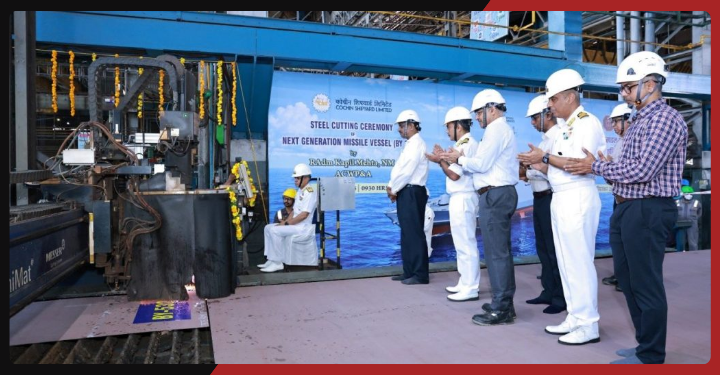
Interestingly, the programme is moving forward on multiple ships simultaneously. On September 17, 2026, CSL held the steel-cutting ceremony for the second NGMV. Rear Admiral Kapil Mehta, Assistant Controller of Warship Production and Acquisition, was the chief guest at that event.
This parallel progress is significant because the NGMV programme consists of six vessels. Starting work on the second ship while the first reaches keel laying demonstrates that the shipyard is progressing with the larger production programme rather than treating each vessel as an isolated project.
The NGMVs are planned as high-speed vessels with advanced weapons and sensors. Official information identifies surface-to-surface missile systems, anti-missile defence systems, air-surveillance radars and fire-control radars among their planned capabilities.
The ships are expected to support several types of naval missions. These include maritime strike operations, anti-surface warfare and local naval defence. They are also planned for the protection of offshore development areas.
The design philosophy behind such a vessel is based on combining mobility and firepower. A high-speed platform can be positioned rapidly, while missile and sensor systems can provide it with the ability to detect, track and engage maritime threats. At the same time, defensive systems are intended to help protect the ship during operations.
The project also has a wider industrial significance. CSL’s chairman described the NGMV programme as marking the shipyard’s entry into construction of advanced weapon-intensive platforms for the Indian Navy.
The Ministry of Defence has further highlighted the indigenous nature of the programme. It says major role-defining equipment is being developed and manufactured domestically. The project is therefore linked to the government’s defence-indigenisation goals, including Aatmanirbhar Bharat and Make in India.
For India’s naval shipbuilding sector, programmes such as the NGMV project are important because advanced warships require coordination between ship designers, shipyards, equipment manufacturers, classification organisations, naval authorities and specialised workers.
The keel-laying event also illustrates how a naval vessel progresses through multiple construction phases. Steel cutting initiates the physical fabrication process, followed by structural assembly and other stages before the vessel can eventually be launched and tested.
The first NGMV has now crossed the keel-laying milestone, while the second has entered construction through steel cutting. The remaining vessels will follow as production continues.
The project is therefore entering a period of sustained construction activity at Kochi. For the Indian Navy, the eventual objective is to add six modern missile vessels to its fleet. For CSL, the programme offers an opportunity to strengthen its capability in building advanced naval combat platforms.
The latest milestones suggest that the NGMV programme is moving from its initial preparatory phase into a more advanced stage of physical ship construction.
Journalist Details

- Jitendra Kumar is an Indian journalist and social activist from Hathras in Uttar Pradesh is known as the senior journalist and founder of Xpert Times Network Private Limited.
Latest entries
 Latest NewsSeptember 19, 2026From Steel Cutting to Keel Laying: Indian Navy’s First NGMV Moves Ahead at Cochin Shipyard
 Latest NewsSeptember 18, 2026More Than 50 CCTV Cameras Examined In Delhi Teen Murder Investigation
 Bharat StoriesSeptember 18, 2026DJ VIX: The London Born Indian DJ Bringing Three Decades Of Global Experience To The World Of Luxury Celebrations In 2026
 NewsSeptember 16, 2026Mecca Security on Alert After Saudi Forces Shoot Down Houthi Drone