Harmanpreet Kaur’s Captaincy Journey Ends After Years of Highs, Pressure and Historic Achievements
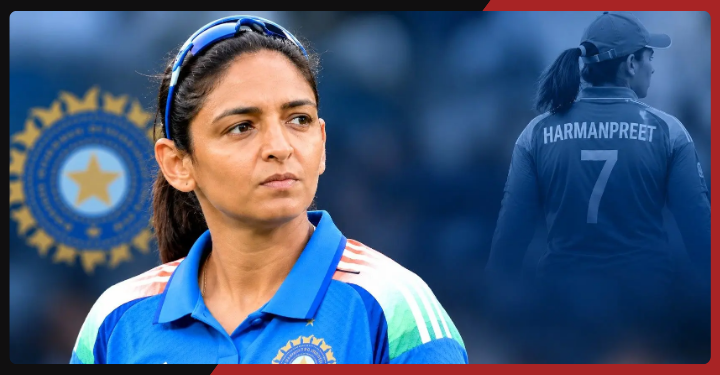
Harmanpreet Kaur’s decision to step down as captain of the Indian women’s cricket team across all formats has brought an end to one of the longest and most closely followed leadership journeys in Indian women’s cricket. After years of carrying the responsibility of leading India in Tests, ODIs and T20Is, Harmanpreet will now continue her international career without the additional burden of captaincy.
Her decision came after a BCCI review meeting in Guwahati, where the board and team management assessed the team’s recent performances and discussed its future direction. The meeting was attended by BCCI secretary Devajit Saikia, head coach Amol Muzumdar, Harmanpreet and vice-captain Smriti Mandhana.
Harmanpreet’s captaincy journey began in T20 internationals in 2016. She subsequently became India’s full-time ODI and Test captain following Mithali Raj’s retirement in 2022. Over the years, she became synonymous with Indian women’s cricket, leading the team through major tournaments, difficult rebuilding phases and moments of extraordinary success.
One of the defining achievements of her tenure came with India’s historic Women’s ODI World Cup triumph. Under Harmanpreet’s leadership, India finally captured the ODI World Cup, achieving a landmark success for the country’s women’s team. The victory represented the culmination of years of investment, development and growing belief within Indian women’s cricket.
Her leadership was also associated with success at the Asian Games, where India won gold medals in consecutive editions. These achievements strengthened the team’s reputation and demonstrated that India could compete successfully across different international competitions.
But captaincy was not always about celebrations. Harmanpreet had to deal with the intense scrutiny that accompanies leadership of a national team. Every defeat, selection decision and tactical call attracted attention, while the expectations surrounding Indian cricket continued to rise.
In her farewell message, Harmanpreet acknowledged that captaincy involved memories, emotions and sacrifices. She indicated that there were occasions when she had to put personal ambitions and aspects of her own game behind the interests of the team.
That statement provides an insight into the demands placed on an international captain. Leadership requires constant decision-making, communication with players and coaches, and the ability to handle criticism. Over a long period, those responsibilities can become as demanding as the cricket itself.
Harmanpreet’s decision does not mean she is retiring from international cricket. Instead, she intends to remain part of the Indian team as a player. That could give her an opportunity to focus more closely on her batting and overall performance while continuing to offer experience to the younger members of the squad.
Her presence could also help make the leadership transition smoother. A new captain will inherit a squad that includes several players who have spent years playing under Harmanpreet. Her experience of international cricket could prove valuable as the team moves into a new phase.
The decision also creates an important question for the BCCI: who should lead India next? Smriti Mandhana is among the most obvious candidates. As vice-captain and one of the team’s senior players, she already occupies an important position within the leadership group.
However, whoever eventually receives the captaincy will face a significant challenge. India’s success at the World Cup has raised expectations, and supporters will want the team to remain among the world’s leading sides.
At the same time, the new leadership will have to prepare for the future. Younger players are increasingly becoming important parts of the national setup, and the captain will be expected to help create an environment in which emerging talent can develop.
Harmanpreet’s own legacy will inevitably become part of that transition. She helped lead Indian women’s cricket during a period when the sport expanded significantly in popularity, professionalism and commercial importance.
Her aggressive approach and competitive personality also made her one of the most recognisable figures in the women’s game. For many fans, she represented a generation of players that helped move women’s cricket into a new era.
Now, however, the captaincy belongs to the future. Harmanpreet’s decision gives the BCCI an opportunity to establish a new leadership structure while retaining one of its most experienced players within the squad.
The change should therefore not be interpreted simply as an ending. It is also a carefully significant transition. Harmanpreet has completed her period as captain, but she can still contribute through her performances, knowledge and experience.
Indian women’s cricket now stands at an important crossroads. The next captain will inherit a team with talent, ambition and the confidence created by historic achievements. The challenge will be to convert that foundation into sustained success.
For Harmanpreet Kaur, the next chapter is likely to be different but no less important. After years of leading India and carrying the expectations associated with the captaincy, she can now concentrate on what brought her to international cricket in the first place — playing the game.
Her captaincy era will be remembered for historic victories, difficult moments, personal sacrifices and the continued growth of Indian women’s cricket. As she steps aside from leadership, the focus now shifts to the team’s next chapter and the new figure who will be entrusted with guiding India forward.
Journalist Details

- Jitendra Kumar is an Indian journalist and social activist from Hathras in Uttar Pradesh is known as the senior journalist and founder of Xpert Times Network Private Limited.
Latest entries
 NewsOctober 7, 2026Rahul Gandhi Leads Opposition Showdown With Election Commission Over Voter Rolls
 NewsOctober 6, 2026Harmanpreet Kaur’s Captaincy Journey Ends After Years of Highs, Pressure and Historic Achievements
 NewsOctober 4, 2026Houthi Positions Targeted in Major Yemen Offensive as Army Claims Hundreds Killed
 Latest NewsOctober 3, 2026CJP Announces Fresh Delhi Protest as Dipke Targets Gyanesh Kumar