Runoff Looms in Brazil as Bolsonaro’s Lead Narrows During Vote Count
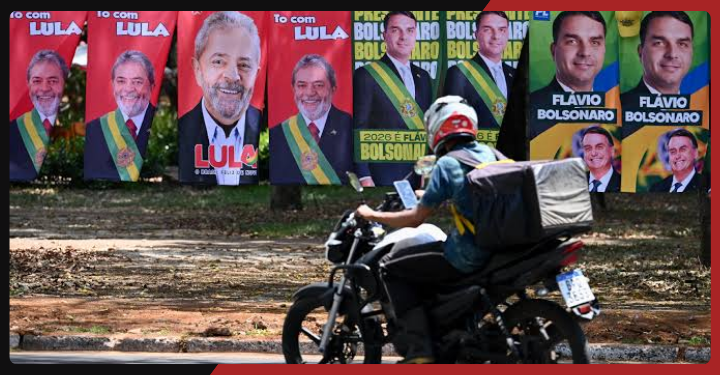
A runoff is increasingly likely in Brazil’s presidential election after projections showed Jair Bolsonaro’s lead shrinking as the vote count progressed.
The development has created fresh uncertainty around an election that was already expected to be closely contested. Bolsonaro’s supporters had hoped that his early advantage would translate into a first-round victory, but the narrowing margin suggests that the race may require another round.
Brazilian presidential elections can involve multiple candidates, making it difficult for one contender to secure an outright majority. When no candidate crosses the required threshold, the two leading candidates advance to a second round.
That possibility now appears increasingly important.
Bolsonaro remains a powerful political figure with a loyal conservative base. His campaign has emphasized traditional conservative positions, stronger public security measures and criticism of policies associated with the political left.
His political movement has remained influential even after his presidency ended. The election has demonstrated that his supporters continue to represent a substantial portion of Brazil’s electorate.
However, Bolsonaro also faces a determined opposition. His political career has been marked by intense polarization, and his critics remain strongly motivated to prevent his return to power.
That division is reflected in the close vote.
A runoff would give both campaigns an opportunity to redefine their messages. Bolsonaro would need to maintain his conservative base while attracting voters who supported other candidates. His challenger would face the same challenge from the opposite direction.
The period between the two rounds could therefore become politically intense. Candidates are likely to focus on economic issues, crime, employment, government spending and social policy.
Brazil’s economy will be a central concern. Voters are closely affected by prices, wages, employment opportunities and the cost of essential goods. Political promises concerning economic growth and fiscal management could influence undecided voters.
Public security is equally significant. Crime remains a major concern in many parts of Brazil, making policing and security policy important campaign issues.
Environmental policy could also feature prominently. Brazil’s role in protecting the Amazon gives its presidential elections international significance. Foreign governments, environmental organizations and investors will be watching the next government’s policies.
The election also has implications for Brazil’s relationships with other countries. As the region’s largest economy and a major diplomatic power, Brazil has influence across South America and beyond.
Markets are likely to remain attentive to political developments. Investors often respond to expectations regarding fiscal policy, government spending and regulation.
The narrowing Bolsonaro lead demonstrates why early projections must be treated cautiously. Voting patterns can vary across regions, and later-counted ballots may significantly change the apparent balance.
Until the electoral authority announces final results, neither a victory nor a runoff should be considered officially settled solely on the basis of projections.
Nevertheless, the political significance of the trend is clear. Bolsonaro is facing a closer contest than some early projections suggested.
If the runoff becomes official, the campaign will enter a new stage in which every major bloc of voters could matter.
The election’s final outcome may therefore depend not simply on who leads the first round, but on who can build the broadest coalition before the second vote.
Brazil’s presidential contest is far from over, and the narrowing margin has ensured that the next stage will be watched closely both at home and abroad.
Journalist Details

Latest entries
 NewsOctober 5, 2026Runoff Looms in Brazil as Bolsonaro’s Lead Narrows During Vote Count
 Latest NewsOctober 1, 2026Tennessee Halts Executions After Christa Pike Survives Death Sentence Attempt
 Latest NewsSeptember 26, 2026Gyanesh Kumar Row Expands as Political Parties Seek Greater Transparency From Poll Body
 Crime NewsSeptember 22, 2026One Suspect Held After Gunfire in Delhi Minor Assault Investigation