
Tarun Tejpal Found Guilty by Bombay High Court After Goa Government’s Successful Appeal
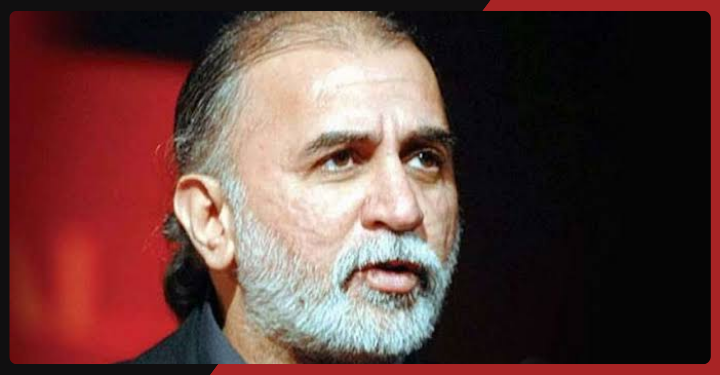
In a major legal reversal more than a decade after the alleged offence, the Bombay High Court has convicted former Tehelka editor-in-chief Tarun Tejpal in the 2013 sexual assault case, overturning his acquittal by a Goa trial court. The judgment comes after the Goa government challenged the 2021 verdict that had cleared Tejpal of all charges. The High Court’s decision has once again placed the high-profile case in the national spotlight and reignited discussions about justice, workplace safety, and accountability for sexual offences.
The case has been one of India’s most closely followed criminal trials involving a prominent media personality. With the High Court now recording a conviction, the legal proceedings enter a new phase, as the court is expected to hear arguments on sentencing before deciding the punishment. Meanwhile, Tejpal’s legal team has announced that it intends to challenge the judgment before the Supreme Court.
The allegations date back to November 2013, when a young journalist working with Tehelka accused Tejpal of sexually assaulting her during the publication’s ThinkFest event held at a luxury hotel in Goa. According to the prosecution, the alleged assaults occurred inside a hotel elevator on two consecutive days. The complainant alleged that despite her repeated resistance, Tejpal continued his actions, leading her to report the incident to senior members of the organisation.
The allegations quickly became national news, triggering widespread debate about sexual harassment in the workplace and the responsibilities of employers to provide safe environments for employees. The controversy also raised important questions about power dynamics within media organisations, where senior executives often wield significant influence over junior staff.
Following the complaint, the Goa Police initiated a criminal investigation and registered a case under various provisions of the Indian Penal Code, including charges related to rape, sexual assault, and wrongful confinement. Investigators examined CCTV footage, hotel records, email exchanges, witness testimonies, and other documentary evidence to build the prosecution’s case.
Throughout the legal proceedings, Tarun Tejpal denied all allegations. His defence consistently argued that any interaction between him and the complainant had been consensual. The defence also maintained that the prosecution had failed to establish guilt beyond reasonable doubt and questioned certain aspects of the police investigation.
After years of hearings, the Goa Sessions Court acquitted Tejpal in May 2021. The trial court held that the prosecution had failed to prove the charges beyond reasonable doubt and pointed to what it considered inconsistencies in the evidence. The verdict generated considerable debate, with many legal scholars and women’s rights organisations expressing concern over the reasoning adopted by the court.
Unhappy with the acquittal, the Goa government filed an appeal before the Bombay High Court. During the appellate proceedings, the prosecution argued that the trial court had committed significant legal and factual errors while evaluating the evidence. State prosecutors submitted that the lower court had overlooked critical material, misapplied established legal principles, and drawn conclusions that were not supported by the record.
After hearing extensive arguments from both sides, the Bombay High Court ruled in favour of the Goa government’s appeal. The court concluded that the acquittal was legally unsustainable and that the evidence presented during the trial justified a conviction. The High Court therefore set aside the earlier judgment and found Tejpal guilty.
Legal experts have observed that appellate courts do not ordinarily interfere with acquittals unless serious errors are found in the trial court’s reasoning. In this case, the High Court determined that such intervention was necessary after a detailed reassessment of the evidence.
As required under Indian law, the identity of the complainant has not been disclosed in order to protect her privacy.
The High Court’s verdict has significant legal and social implications. For legal professionals, it reinforces the principle that appellate courts have the authority to correct errors made during trial proceedings when evidence has been improperly appreciated. For workplace organisations, the case serves as another reminder of the importance of robust mechanisms for addressing allegations of sexual misconduct and ensuring the safety of employees.
With sentencing yet to be announced and a likely appeal before the Supreme Court, the legal battle is not over. Nevertheless, the Bombay High Court’s decision marks one of the most consequential developments in the decade-long case and is expected to remain an important reference point in discussions surrounding sexual assault law, workplace accountability, and judicial review in India.
Journalist Details

- Jitendra Kumar is an Indian journalist and social activist from Hathras in Uttar Pradesh is known as the senior journalist and founder of Xpert Times Network Private Limited.
Latest entries
 Latest NewsSeptember 19, 2026From Steel Cutting to Keel Laying: Indian Navy’s First NGMV Moves Ahead at Cochin Shipyard
 Latest NewsSeptember 18, 2026More Than 50 CCTV Cameras Examined In Delhi Teen Murder Investigation
 Bharat StoriesSeptember 18, 2026DJ VIX: The London Born Indian DJ Bringing Three Decades Of Global Experience To The World Of Luxury Celebrations In 2026
 NewsSeptember 16, 2026Mecca Security on Alert After Saudi Forces Shoot Down Houthi Drone