
The ‘Cockroach’ Label Explained: How India’s Gen Z Learned to Survive Every Crisis
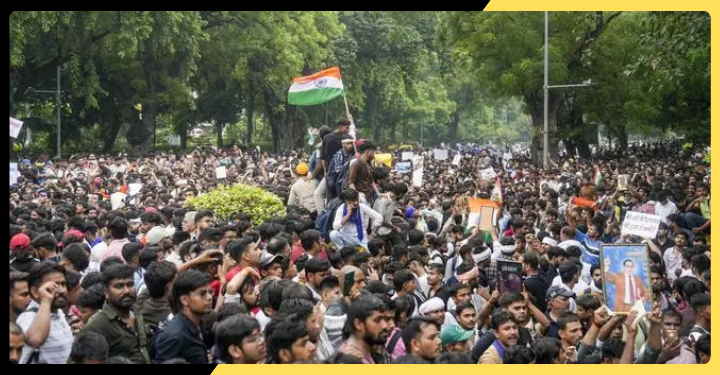
Few generational labels have sparked as much debate as the term “Cockroach Generation.” At first glance, the phrase appears harsh, even offensive. After all, cockroaches are commonly associated with pests rather than people. However, in recent discussions about India’s Generation Z, the nickname has taken on a different meaning. It is increasingly used as a metaphor for extraordinary resilience—the ability to survive, adapt and keep moving forward despite constant setbacks.
For many young Indians, the label reflects their lived experience. Born into an era of rapid technological change, economic uncertainty and global crises, Gen Z has rarely enjoyed a predictable path to adulthood. Instead, this generation has repeatedly faced challenges that forced them to adapt faster than those who came before them.
Unlike earlier generations, many members of Gen Z grew up during India’s digital revolution. Smartphones, affordable internet and social media transformed how they learned, communicated and built careers. Information became available instantly, opening doors to online education, global networking and digital entrepreneurship.
Yet this technological progress also brought new pressures. Social media created an environment of constant comparison, where success stories, luxury lifestyles and career milestones were displayed every day. Young people often found themselves measuring their achievements against carefully curated online images, leading to increased stress and unrealistic expectations.
Just as Gen Z was preparing to enter universities or begin their careers, the COVID-19 pandemic disrupted life on an unprecedented scale. Schools closed, college campuses emptied and millions of students shifted to online learning almost overnight. Graduation ceremonies were cancelled, internships disappeared and recruitment drives slowed dramatically.
For many young graduates, the transition from education to employment became far more difficult than expected. Companies froze hiring, reduced salaries or postponed expansion plans. Instead of stepping into stable careers, many entered one of the most uncertain job markets in recent history.
Despite these setbacks, India’s young people adapted remarkably quickly. Students mastered virtual classrooms, professionals learned remote working and aspiring entrepreneurs launched online businesses from their homes. Many developed digital skills that would later become valuable in a changing economy.
This adaptability is one reason the “Cockroach Generation” label has gained attention. Like the metaphor suggests, Gen Z has repeatedly found ways to survive situations beyond its control.
Economic challenges have continued beyond the pandemic. Rising living costs, competitive job markets and rapidly changing industry requirements have created ongoing uncertainty. Many young professionals have discovered that obtaining a university degree is only the beginning. Employers increasingly expect additional certifications, practical experience and continuous learning.
As technology evolves, so do workplace expectations. Artificial intelligence, automation and digital transformation are reshaping industries across India. Careers that were considered secure a decade ago are changing rapidly, while entirely new professions are emerging.
Rather than resisting change, Gen Z has embraced lifelong learning. Online courses, coding boot camps, digital certifications and self-paced learning platforms have become essential tools for career development. Young professionals understand that staying relevant requires continuous skill improvement.
Another defining characteristic of this generation is its entrepreneurial mindset. Instead of relying solely on traditional employment, many young Indians are creating their own opportunities. Freelancing, content creation, e-commerce and technology start-ups have become increasingly popular career paths.
The rise of the creator economy has also allowed individuals to earn income through digital platforms, producing educational content, entertainment, lifestyle advice and specialised expertise. This willingness to explore unconventional careers demonstrates Gen Z’s flexibility and creativity.
However, resilience should not be confused with unlimited endurance. While young Indians have repeatedly adapted to changing circumstances, many are now questioning whether constant survival should be considered success.
Workplace burnout, mental health concerns and financial insecurity have become central issues for this generation. Long working hours, rising housing costs and uncertain career prospects have encouraged many young professionals to rethink traditional definitions of achievement.
Unlike previous generations, Gen Z is increasingly willing to discuss these concerns openly. Conversations about anxiety, work-life balance and emotional well-being have become common across universities, workplaces and social media platforms. Seeking support is gradually becoming a sign of self-awareness rather than weakness.
Technology has amplified these voices. Social media enables young professionals to share workplace experiences, expose unfair practices and advocate for healthier employment standards. Viral discussions have encouraged companies to pay greater attention to employee welfare and organisational culture.
Importantly, Gen Z is not rejecting hard work. Instead, it is challenging outdated assumptions that success requires constant sacrifice. Many believe ambition should coexist with personal health, family relationships and financial security.
The “Cockroach Generation” label therefore carries two very different meanings. On one hand, it recognises remarkable resilience—the ability to withstand repeated crises and continue moving forward. On the other hand, it highlights a deeper concern: no generation should be expected to spend its entire life simply surviving.
India’s Gen Z has overcome educational disruption, economic uncertainty, technological change and intense competition. These experiences have made them adaptable, resourceful and determined. Yet they are also demanding something more than resilience. They want fair opportunities, respectful workplaces and a future where success is measured not only by endurance but also by well-being, stability and fulfilment.
Ultimately, the story of India’s so-called “Cockroach Generation” is not about weakness or victimhood. It is about a generation that has weathered extraordinary challenges and emerged stronger, wiser and more vocal about the kind of future it wants to build. Rather than accepting endless hardship as inevitable, India’s Gen Z is transforming resilience into a force for change—one that could redefine work, education and society for decades to come.
Journalist Details

- Jitendra Kumar is an Indian journalist and social activist from Hathras in Uttar Pradesh is known as the senior journalist and founder of Xpert Times Network Private Limited.
Latest entries
 Latest NewsSeptember 21, 2026Millions on Alert as Typhoon Dujuan Threatens Tokyo Region With Flooding and Landslides
 Bharat StoriesSeptember 21, 2026Sharp Sixx From Mumbai Emerges As One Of The Most Distinctive Acappella Bands Of 2026
 Latest NewsSeptember 19, 2026From Steel Cutting to Keel Laying: Indian Navy’s First NGMV Moves Ahead at Cochin Shipyard
 Latest NewsSeptember 18, 2026More Than 50 CCTV Cameras Examined In Delhi Teen Murder Investigation