Why Jharkhand Students Are Protesting: Recruitment Exam Row, CBI Demand and Assembly March Explained

RANCHI: The dramatic student march towards the Jharkhand Assembly on Monday is the latest development in a recruitment examination controversy that has been unfolding in the state for weeks. Thousands of students and job aspirants took to the streets of Ranchi, demanding action over alleged irregularities in examinations conducted by JPSC and JSSC.
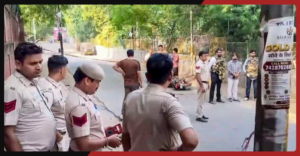
The march was planned as a protest against what students describe as a lack of transparency in the recruitment system. The situation escalated after protesters breached police barricades while moving towards the Assembly. Police used water cannons and lathi-charge, with tear gas also reported during the confrontation.
But what exactly are the students demanding, and why has the issue continued despite government talks?
The controversy centres on allegations of irregularities in several recruitment examinations. The 14th JPSC Civil Services Examination has been one of the major issues raised by protesters. Student groups have also questioned the functioning of JSSC and the handling of alleged irregularities in recruitment examinations.
One of the most important demands is a CBI investigation. Students say they do not have sufficient confidence in state-level investigations and want an independent agency to examine the allegations. They have questioned whether the existing investigations have adequately identified those responsible for alleged irregularities.
The government has taken a different position. It has argued that many of the demands raised by students have already been addressed. The administration has reportedly claimed that 98% of the demands have been fulfilled. Protesters, however, have strongly disputed that assessment, saying that their principal concerns remain unresolved.
The disagreement over the CBI investigation has emerged as the biggest obstacle to a settlement.
The issue is particularly sensitive because government recruitment examinations are a major employment pathway for young people in Jharkhand. Aspirants often spend years preparing for competitive tests. They may postpone other career options, invest heavily in coaching and study material, and repeatedly appear for examinations.
When an examination becomes controversial, candidates can face uncertainty over whether their results will remain valid, whether a test will be cancelled or whether a fresh examination will be conducted.
Age limits are another concern. A prolonged recruitment cycle can mean that candidates lose eligibility for future examinations. This makes delays particularly stressful for aspirants who are close to the upper age limit.
Student protests over the issue have therefore continued despite negotiations. Earlier in July, thousands of students marched in Ranchi against alleged irregularities and demanded transparency in recruitment.
The controversy has also attracted political parties. Opposition leaders have demanded a CBI inquiry and accused the government of failing to provide adequate answers. BJP MPs from Jharkhand staged a protest in Parliament over the issue, while other political groups have also spoken about recruitment reform.
The government, however, has attempted to present dialogue as the preferred route. Chief Minister Hemant Soren has said that the government is willing to engage with protesters and work toward justice and transparency.
The administration also prepared extensively for Monday’s Assembly march. Security was strengthened around the Assembly and prohibitory restrictions were imposed to prevent a large gathering from entering the restricted area.
The protesters nevertheless moved forward. When they reached the barricades, tensions increased. Police attempted to prevent further movement, leading to the use of water cannons and lathi-charge. Tear gas was also reported.
The confrontation has changed the character of the protest. What began primarily as a dispute over recruitment examinations has now become a major law-and-order issue. It has also intensified public debate about the balance between maintaining security around government institutions and allowing students to exercise their right to protest.
The immediate solution will depend on whether the two sides can return to negotiations. The students want concrete action and an independent investigation. The government needs to convince them that its proposed mechanisms can provide credible answers.
Until that happens, the Jharkhand recruitment controversy is likely to remain active. The students’ movement reflects a deeper concern among young people about the reliability of government recruitment systems. Their central message is that competitive examinations must be transparent, predictable and protected from malpractice.
Monday’s events show that the issue has reached a point where a political or administrative response alone may not be enough. Rebuilding trust among thousands of aspirants could require transparent investigations, clear timelines and demonstrable reforms in the recruitment process.
Journalist Details

- Jitendra Kumar is an Indian journalist and social activist from Hathras in Uttar Pradesh is known as the senior journalist and founder of Xpert Times Network Private Limited.
Latest entries
 NewsSeptember 25, 2026Taiwan Remains One of the Most Sensitive Issues Between Washington and Beijing
 Latest NewsSeptember 24, 2026Fire Engulfs Delhi-Mahoba Sleeper Bus on Yamuna Expressway, Nine Dead
 Latest NewsSeptember 21, 2026Millions on Alert as Typhoon Dujuan Threatens Tokyo Region With Flooding and Landslides
 Bharat StoriesSeptember 21, 2026Sharp Sixx From Mumbai Emerges As One Of The Most Distinctive Acappella Bands Of 2026