
Rescue Operations Intensify Amid Continuous Downpour
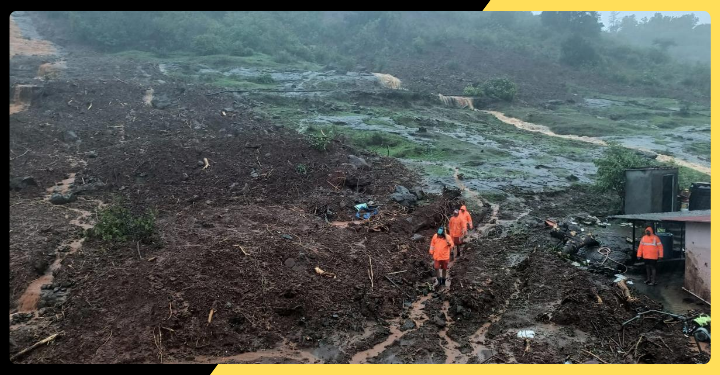
As relentless monsoon rains continue to lash Mumbai, Palghar, Raigad, and several other districts of Maharashtra, rescue and relief operations have been intensified to protect lives and minimize damage. Emergency response teams have been working around the clock, responding to distress calls, evacuating residents from flood-prone areas, and restoring essential services disrupted by the severe weather. With forecasts predicting more heavy rainfall, authorities remain on high alert, ensuring that resources and personnel are strategically deployed across vulnerable locations.
The Maharashtra government activated its disaster management machinery soon after the heavy rainfall began causing widespread flooding. The State Disaster Response Force (SDRF), National Disaster Response Force (NDRF), local police, fire brigade personnel, municipal workers, and health officials have joined forces to coordinate rescue efforts. Their primary focus has been to evacuate stranded residents, provide immediate medical assistance, and ensure that food, drinking water, and shelter reach those affected.
In Mumbai, rescue teams used inflatable boats and specialized equipment to evacuate families trapped in waterlogged neighborhoods. Several low-lying residential colonies witnessed floodwaters entering homes, leaving residents unable to move to safer locations without assistance. Elderly people, children, pregnant women, and individuals with disabilities were given priority during evacuation operations. Rescue personnel carefully transported them to nearby relief camps established by municipal authorities.
Palghar district witnessed similar rescue efforts as overflowing rivers and submerged roads isolated several villages. Rescue teams navigated through flooded areas using boats to deliver food packets, bottled water, medicines, and other essential supplies. In certain locations, emergency responders had to walk long distances carrying relief materials where road access had been completely cut off by floodwaters.
Raigad, known for its hilly terrain and landslide-prone regions, remained under close observation throughout the rainfall spell. Authorities evacuated residents living near unstable hill slopes after continuous rain increased the risk of landslides. Temporary shelters were arranged in schools, community halls, and government buildings equipped with bedding, sanitation facilities, clean drinking water, and healthcare services. Officials emphasized that early evacuation significantly reduced the risk of casualties in areas vulnerable to landslides.
The National Disaster Response Force played a critical role in several rescue missions. Highly trained personnel equipped with life jackets, ropes, rescue boats, cutting equipment, and emergency medical kits responded swiftly to distress situations. Teams conducted search operations in flooded neighborhoods where people were reported missing and rescued individuals stranded on rooftops or trapped inside vehicles surrounded by rising water.
Fire brigade personnel also remained extremely busy responding to hundreds of emergency calls each day. Apart from rescue operations, firefighters cleared fallen trees blocking roads, pumped water out of flooded buildings, and assisted in structural assessments of damaged properties. Their prompt response helped restore access to several important roads and public facilities.
Police officers were deployed across major intersections and flood-prone locations to regulate traffic and prevent accidents. They also assisted evacuation teams by ensuring that emergency vehicles could move quickly through congested roads. Barricades were placed around dangerous areas where deep water or damaged infrastructure posed serious risks to the public. Citizens were repeatedly advised not to ignore road closures or attempt to cross flooded streets.
Healthcare teams were mobilized to provide medical assistance at relief camps and affected communities. Doctors, nurses, and paramedics treated injuries caused by falls, electrocution, and debris while also monitoring patients for signs of waterborne diseases. Vaccination drives and distribution of preventive medicines were initiated in some locations to reduce the risk of infections commonly associated with flooding.
Municipal corporations intensified efforts to restore essential civic infrastructure. Drainage workers operated high-capacity pumps to remove stagnant water from major roads and residential colonies. Engineering teams inspected bridges, flyovers, drainage systems, and public buildings for structural safety before allowing normal public access. Electricity department personnel worked continuously to restore power in areas where supply had been suspended due to water damage.
Communication remained a vital part of rescue operations. Control rooms functioned 24 hours a day, receiving emergency calls from residents and coordinating responses among different government agencies. Helpline numbers were widely shared through television broadcasts, radio announcements, newspapers, and social media platforms. Authorities encouraged citizens to report flooding, stranded individuals, damaged power lines, fallen trees, and blocked roads immediately.
Community participation significantly strengthened relief efforts. Local volunteers, resident welfare associations, charitable organizations, and non-governmental organizations distributed cooked meals, drinking water, blankets, clothing, hygiene kits, and medicines to flood-affected families. Many volunteers assisted rescue personnel by identifying vulnerable residents, translating local information, and helping distribute emergency supplies efficiently.
Despite these extensive efforts, rescue teams continued to face significant challenges. Continuous rainfall reduced visibility, while rapidly rising water levels complicated evacuation operations. Strong currents in flooded rivers and streams made boat rescues dangerous, and landslide risks limited access to certain remote villages. Nevertheless, emergency personnel remained committed to reaching every affected community regardless of difficult conditions.
Authorities have urged residents to cooperate fully with rescue teams and follow official instructions without delay. People living in flood-prone or landslide-sensitive areas have been advised to evacuate immediately when directed by local officials. Citizens have also been requested to avoid spreading rumors on social media and instead rely on verified updates from government agencies and the India Meteorological Department.
As Maharashtra continues to battle one of its most challenging monsoon seasons in recent years, the dedication of emergency responders, healthcare workers, civic staff, and volunteers has become a source of hope for affected communities. Their coordinated efforts have saved countless lives and continue to play a crucial role in helping the state recover from the devastating impact of record-breaking rainfall.
Journalist Details

- Jitendra Kumar is an Indian journalist and social activist from Hathras in Uttar Pradesh is known as the senior journalist and founder of Xpert Times Network Private Limited.
Latest entries
 Bharat StoriesOctober 23, 2026DJ BPM AKA Bhavan Parekh Named Among Best DJ Of 2026 For His Signature Sounds, Global Performances And Being A Complete RIOT On Stage
 Bharat StoriesOctober 22, 2026Deejay Sachin Named Among The Best DJ Of 2026 For His 28 Year Legacy In The Electronic Music Industry
 Latest NewsOctober 20, 2026RSS Chief Urges Protesters to Seek Solutions Rather Than Create Social Divisions
 Bharat StoriesOctober 16, 2026Gurdeep Singh Live Named Among The Best Live Musical Artist Of 2026 For His Remarkable Journey And Musical Legacy Across India