‘Criticism Is Fine, Insults Are Not’: Vijay Redefines the Limits of Political Speech
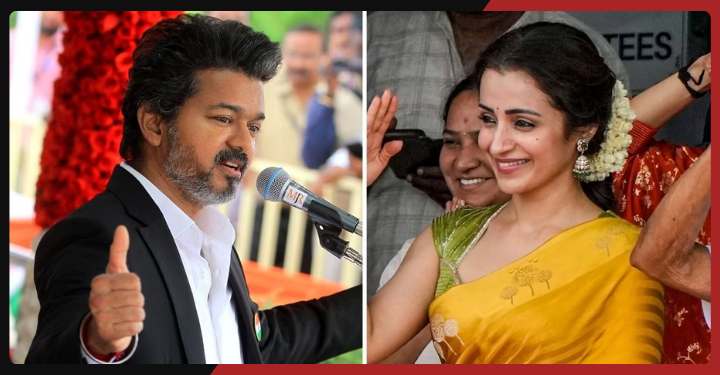
Tamil Nadu Chief Minister C. Joseph Vijay has delivered a clear message on the limits of political speech: criticism is a democratic right, but personal insults and degrading remarks against women should never be normalised.
Vijay made the remarks in the Tamil Nadu Assembly while addressing issues related to law and order. His comments came at a politically sensitive moment, following controversy over alleged double-meaning remarks connected to actor Trisha Krishnan.
Without directly naming Opposition leader Udhayanidhi Stalin, Vijay spoke about the responsibility attached to freedom of expression.
He said political leaders were free to criticise one another. Governments could be questioned, policies could be challenged and political opponents could be attacked over their performance.
But Vijay argued that freedom of speech should not be confused with the freedom to humiliate people.
The Chief Minister particularly expressed concern about language directed at women.
He criticised the use of defamatory remarks, abusive expressions and double meanings, saying such language was damaging the quality of public discourse.
Vijay’s statement is important because freedom of speech has become one of the central issues in political debates across India.
Politicians frequently defend controversial remarks by referring to their right to express themselves. But Vijay’s argument was that rights also come with responsibility.
The question, according to his speech, is not whether people have the freedom to speak. The question is how that freedom is being used.
His comments followed the controversy involving Udhayanidhi Stalin and Trisha.
During a Cauvery-related protest in Thanjavur, supporters reportedly shouted Trisha’s name while Stalin was addressing the gathering. A comment made afterward was interpreted by critics as a vulgar or double-meaning reference to the actor.
The video generated widespread reactions and quickly became part of the political conflict between TVK and DMK.
Stalin, however, has strongly rejected allegations that he intended to insult Trisha. He said his words were connected to the Cauvery issue and accused his political opponents of giving the statement a meaning he did not intend.
Vijay’s response did not directly examine the competing interpretations of the controversial remark.
Instead, he addressed the broader principle.
He said that politicians should avoid speaking in ways that personally demean women or others. His warning suggested that political rivalry should remain focused on public issues rather than personal humiliation.
Vijay also noted the importance of women in his political success, saying women had played a major role in bringing him to power.
That statement gave his comments a personal and political dimension.
For the Chief Minister, defending women’s dignity was not simply an abstract principle. He connected it directly to the people who had supported his political journey.
His speech could also have consequences for future political campaigns.
Tamil Nadu is known for passionate and often aggressive political competition. Public meetings, speeches and social media campaigns frequently involve sharp attacks between rival parties.
Vijay’s intervention may increase pressure on political leaders to reconsider the language used during these confrontations.
The controversy also raises questions about accountability in the age of viral videos.
A statement made at a public event can now be recorded, edited, shared and interpreted by millions of people.
Political leaders therefore face greater scrutiny than ever before.
Vijay’s central argument was simple: people are watching.
The public can judge whether political leaders are discussing real issues or simply using offensive language to attract attention.
As Tamil Nadu’s political landscape continues to evolve, Vijay’s speech has drawn a clear line between legitimate democratic criticism and personal abuse.
Political disagreement, he suggested, is unavoidable.
But respect should never be optional.
Journalist Details

Latest entries
 NewsOctober 22, 2026Saudi Airport Attack Raises Fresh Concerns Over Security of Civilian Infrastructure
 NewsOctober 12, 2026INDIA Bloc Raises Vote Theft Concerns as CJI Directs Attention to Legal Process
 NewsOctober 5, 2026Runoff Looms in Brazil as Bolsonaro’s Lead Narrows During Vote Count
 Latest NewsOctober 1, 2026Tennessee Halts Executions After Christa Pike Survives Death Sentence Attempt