
Delhi High Court Bomb Threat Triggers Security Sweep as Capital Prepares for Independence Day
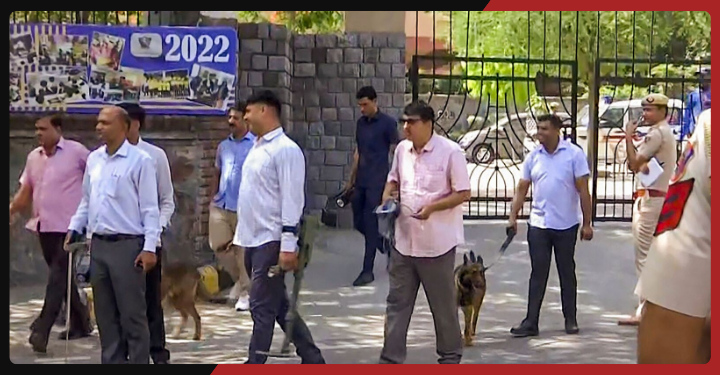
The eve of Independence Day brought a fresh security scare to Delhi after the Delhi High Court received a bomb threat through email on Friday. The communication triggered a security response at the court at a time when agencies across the national capital are already working under heightened vigilance.
Reports said the email arrived at approximately 11:43 am on August 14. It reportedly contained references to the Red Fort and mentioned attackers dressed in khaki. Because the threat came just hours before Independence Day, authorities treated it as a matter requiring immediate attention.
Security teams began checking the High Court premises under the standard procedures followed in response to bomb threats. The searches were aimed at identifying any suspicious object and ensuring the safety of judges, lawyers, court employees and other people associated with the institution.
The incident is significant because the Delhi High Court is located in a city that enters an unusually intensive security phase ahead of August 15. Every year, security agencies deploy additional personnel around important government institutions and public locations.
The Red Fort receives particular attention because the Prime Minister’s Independence Day address takes place there. Security planning around the monument begins well in advance and involves multiple agencies. The reported reference to the Red Fort in the threatening email consequently added to the seriousness with which the communication was assessed.
Delhi’s transportation infrastructure is also closely monitored during the period. Airports, railway stations and Metro stations handle large numbers of passengers, while road restrictions and security checks can affect normal movement.
The Delhi airport has previously experienced heightened security measures before Independence Day. In August 2021, for example, authorities increased personnel deployment, passenger screening and surveillance at aviation facilities after a threat email. Officials also conducted additional anti-sabotage measures and advised passengers to arrive earlier than usual.
Earlier incidents demonstrate why authorities respond quickly even when a threat is later found to be false. In August 2019, a bomb threat affecting Delhi airport led to additional checking of passengers, luggage and cargo. Security agencies later assessed the threat as non-specific.
The pattern shows that security agencies generally follow a precaution-first approach. A threatening communication is assessed, but physical searches and protective measures begin before investigators can conclusively determine the credibility of the claim.
The same principle applies to the latest High Court incident.
Investigators will likely focus on identifying the source of the email and understanding its purpose. Digital communications can sometimes be sent through anonymous or disguised accounts, making attribution difficult. Authorities may therefore need to examine technical evidence alongside the language and claims contained in the message.
Another important question is whether the threat is an isolated act or part of a broader campaign. If multiple institutions receive similar communications, investigators may look for common patterns in wording, timing or digital origin.
For the public, officials generally advise caution and discourage the circulation of unverified information. Rumours can spread rapidly during security incidents and create unnecessary panic.
The High Court incident also highlights the broader security responsibilities associated with national celebrations. Independence Day is a moment of national pride, but it requires extensive logistical planning to ensure public safety.
As security teams continue their assessment, Delhi remains on heightened alert. Authorities are expected to maintain vigilance at sensitive installations through the Independence Day celebrations.
The immediate priority remains the same: establish whether the threat has any substance, protect people and critical institutions, and prevent any attempt to disturb the peaceful observance of Independence Day.
Journalist Details

Latest entries
 NewsOctober 5, 2026Runoff Looms in Brazil as Bolsonaro’s Lead Narrows During Vote Count
 Latest NewsOctober 1, 2026Tennessee Halts Executions After Christa Pike Survives Death Sentence Attempt
 Latest NewsSeptember 26, 2026Gyanesh Kumar Row Expands as Political Parties Seek Greater Transparency From Poll Body
 Crime NewsSeptember 22, 2026One Suspect Held After Gunfire in Delhi Minor Assault Investigation