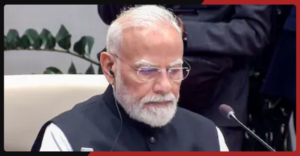
EC Announces Rajya Sabha Poll Schedule, Major Political Shuffle Expected

A major political reshuffle is expected in Parliament after the Election Commission of India announced elections for 24 Rajya Sabha seats on June 18. The elections, spread across 10 states, come as several experienced parliamentarians prepare to retire after completing their six-year terms.
The Rajya Sabha serves as the Upper House of India’s Parliament and plays a crucial role in reviewing legislation, debating national policies, and representing state interests. While the Lok Sabha often dominates headlines, the Rajya Sabha frequently determines whether governments can smoothly pass major bills.
This year’s elections are especially significant because several senior political figures are among those retiring. Congress leader Mallikarjun Kharge, veteran politician Digvijaya Singh, and former Prime Minister H. D. Deve Gowda are among the prominent names associated with the outgoing batch.
The Election Commission said the vacancies arise between June 21 and July 19. Polling will be conducted through elected MLAs under the proportional representation system using the single transferable vote method.
The elections are expected to intensify political calculations in state assemblies. Since Rajya Sabha seats depend on legislative strength, every assembly seat won in past elections now becomes politically valuable. Parties are carefully assessing numbers before announcing candidates.
For the BJP-led NDA, the challenge will be to retain its dominance in the Upper House. The alliance has relied on its Rajya Sabha numbers to support legislative initiatives over the past few years. Opposition parties, meanwhile, view the elections as an opportunity to expand their voice in Parliament and strengthen coordination.
States with closely divided assemblies could witness fierce contests. Political observers are also watching whether regional parties align with national alliances or pursue independent strategies. Smaller parties often become kingmakers in such elections.
The Election Commission also announced bypolls for one Rajya Sabha seat each in Maharashtra and Tamil Nadu. These elections will be conducted alongside the biennial polls.
As the nomination process begins, political lobbying is expected to intensify. Senior leaders, former chief ministers, and influential party organizers are all being considered for Rajya Sabha nominations. Candidate selection could reveal each party’s priorities ahead of future political battles.
Though less visible to ordinary voters, Rajya Sabha elections often have far-reaching consequences. The composition of the Upper House influences lawmaking, alliance stability, and the national political narrative for years to come.
Journalist Details

Latest entries
 NewsSeptember 2, 2026Strait of Hormuz Crisis Deepens as U.S.-Iran Fighting Sends Oil Prices Higher
 Latest NewsAugust 24, 2026From ISRO to Startups: PM Modi Pushes India’s New Space Economy
 NewsAugust 20, 2026China in Focus as Trump Threatens Countries Trading With Iran
 NewsAugust 19, 2026Dubai-Iran Trade Corridor Under Threat as UAE Announces Indefinite Embargo