‘Refuse the Villain Role’: Delhi Police Tells Personnel Not to Fall Into Gen Z Protest Traps
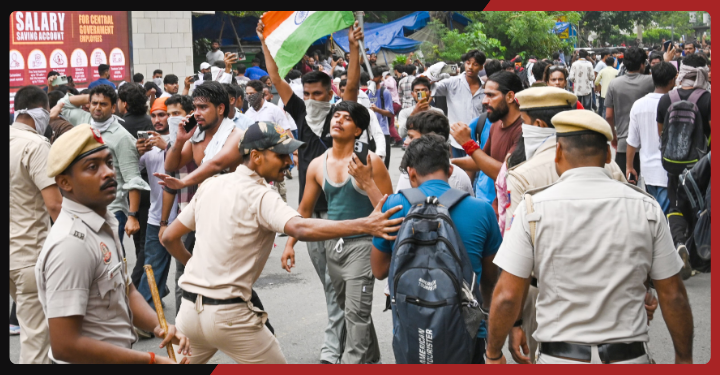
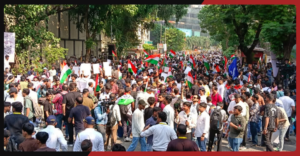
Delhi Police has reportedly advised its personnel to avoid becoming the “villain” in videos recorded by young protesters during demonstrations. The unusual guidance follows the intense social-media attention surrounding recent protests at Jantar Mantar.
The reported advisory tells officers that protesters may attempt to provoke them into emotional reactions. Instead of responding with anger or entering into arguments, personnel have been instructed to remain calm and focus on their official responsibilities.
The message is particularly relevant in an era when protesters and content creators can record police interactions from multiple angles. A confrontation that once ended at the protest site can now continue online long after the demonstrators have left.
According to reports, police personnel have been told that their angry expressions may become part of the protesters’ online content. The advisory reportedly uses the idea of a “film” in which protesters want officers to play the villain, urging personnel to refuse that role.
Officers have reportedly been instructed not to engage in debates. If protesters ask provocative questions or make emotional appeals, personnel should avoid responding unnecessarily. Where communication is unavoidable, a brief instruction to cooperate and an explanation that officers are performing their duty should be sufficient.
The guidelines reportedly state that otherwise officers should maintain silence.
The advisory also reportedly warns personnel against emotional tactics. Protesters could cry, fall at the feet of officers or discuss personal issues in an attempt to generate sympathy or anger. Officers have been advised not to become personally involved in such exchanges.
The focus on emotional control comes against the backdrop of youth-led demonstrations that have used social media as an important part of mobilisation and communication. Recent reporting has described the use of reels, memes and online material as a defining feature of the new protest culture.
The Jantar Mantar demonstrations became particularly visible because of the large number of videos emerging from the site. Police officers were filmed during confrontations as well as more light-hearted exchanges with demonstrators. Some clips subsequently circulated online.
For police officials, the concern is that isolated videos can influence perceptions without necessarily showing the complete circumstances surrounding an incident.
This is where the new instructions are intended to make a difference. If personnel remain calm and avoid unnecessary arguments, there is less opportunity for provocative exchanges to dominate online discussion.
The advice concerning women protesters is another important element. Reports say officers have been instructed to avoid unnecessary physical contact with women protesters and, where possible, have women police personnel handle such interactions.
The guidelines show that modern crowd management requires more than physical control. Officers must also manage communication, emotions and the possibility of instant online exposure.
At the same time, the success of such an approach will depend on implementation. Protests can become unpredictable, particularly when crowds attempt to cross barricades or when police face resistance. Maintaining calm under such circumstances can be difficult.
Nevertheless, the Delhi Police advisory signals a recognition that public-facing police behaviour matters enormously in the social-media age.
For Gen Z protesters, the camera is part of the protest. For police officers, that means every reaction can become evidence, entertainment, commentary or political messaging.
The instruction to “refuse the villain role” is therefore a reflection of a much bigger change: protests are no longer happening only on streets and at public squares. They are also happening on phone screens, where a few seconds of footage can shape the entire narrative.
Journalist Details

- Jitendra Kumar is an Indian journalist and social activist from Hathras in Uttar Pradesh is known as the senior journalist and founder of Xpert Times Network Private Limited.
Latest entries
 Latest NewsOctober 8, 2026SIR Row Spreads From Delhi to Bengaluru as Activists Demand Greater Electoral Transparency
 NewsOctober 7, 2026Rahul Gandhi Leads Opposition Showdown With Election Commission Over Voter Rolls
 NewsOctober 6, 2026Harmanpreet Kaur’s Captaincy Journey Ends After Years of Highs, Pressure and Historic Achievements
 NewsOctober 4, 2026Houthi Positions Targeted in Major Yemen Offensive as Army Claims Hundreds Killed