
Sheikh Hasina’s Reported New Delhi Address Draws Diplomatic Attention as Bangladesh Seeks India’s Response
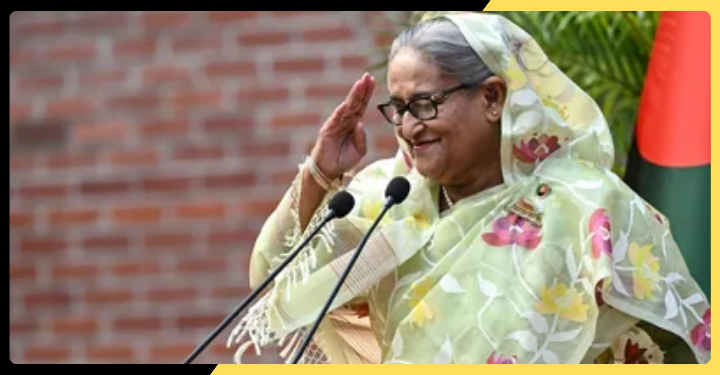
The possibility of former Bangladesh Prime Minister Sheikh Hasina delivering a public speech from New Delhi has sparked fresh diplomatic discussions between India and Bangladesh. Reports indicating that Hasina may soon address supporters from the Indian capital have prompted Bangladesh to seek an official clarification from New Delhi, raising questions about the diplomatic implications of such an event.
According to diplomatic sources, Bangladesh’s interim administration has approached the Indian government through official channels to understand whether India has approved or intends to permit the proposed speech. While no formal protest has been lodged, the request reflects Dhaka’s concerns over the potential political impact of a public address delivered from Indian territory.
Sheikh Hasina has remained in India since departing Bangladesh following the political developments that led to a change in government. Since then, India has maintained that her stay is based on humanitarian considerations and has largely refrained from commenting on reports regarding her political activities.
The latest reports, however, have placed New Delhi in a sensitive diplomatic position. Bangladesh reportedly fears that any political speech by its former prime minister from another country could influence public opinion and domestic political discourse at a time when the country continues to navigate a complex transition.
Although media reports have suggested that Hasina intends to address members of the Bangladeshi diaspora and supporters, there has been no official confirmation regarding the event’s date, venue, or format. Likewise, the Indian government has not publicly stated whether permission has been granted for such a gathering or whether any restrictions may apply.
Diplomatic experts believe India is likely to proceed cautiously. Over the years, New Delhi has consistently maintained that it respects the sovereignty of neighboring countries and does not encourage activities from its territory that could interfere in another nation’s internal affairs. At the same time, India has also sought to balance humanitarian considerations with its broader foreign policy objectives.
The issue has drawn attention because of Sheikh Hasina’s political significance. Having served multiple terms as Bangladesh’s prime minister, she remains one of the country’s most influential political figures. Any statement she makes is expected to receive widespread coverage and could have political implications both within Bangladesh and among the Bangladeshi diaspora.
Observers note that Bangladesh’s decision to seek clarification before the reported speech takes place demonstrates a preference for diplomacy over confrontation. Rather than waiting for the event to occur and responding afterward, Dhaka has chosen to communicate directly with New Delhi in an effort to avoid misunderstandings.
The India-Bangladesh relationship has grown considerably over the last decade, with cooperation extending across trade, security, energy, infrastructure, connectivity, and cultural exchanges. Both countries have invested heavily in strengthening bilateral ties, making it unlikely that either side would want a single issue to disrupt the broader partnership.
Trade between India and Bangladesh has expanded significantly, supported by improved transport links and cross-border infrastructure projects. Cooperation in the energy sector has also deepened, with electricity trade and joint power initiatives benefiting both nations. Security collaboration has helped address border-related challenges, while regular diplomatic exchanges have strengthened political trust.
Foreign policy analysts argue that these shared interests provide a strong incentive for both governments to handle the current situation with restraint. They believe quiet diplomatic engagement will remain the preferred approach unless developments significantly alter the circumstances.
Some experts point out that India has previously dealt with similar situations involving foreign political figures by carefully balancing freedom of expression with diplomatic responsibilities. Whether the same approach will be adopted in this case remains uncertain, particularly given the political sensitivity surrounding Bangladesh’s current transition.
The reported speech has also attracted international attention because India and Bangladesh play important roles in South Asian regional stability. Their close cooperation is viewed as essential for economic integration, regional connectivity, and security initiatives across the Bay of Bengal region.
Political commentators suggest that the content of Sheikh Hasina’s address, if it takes place, may ultimately determine the diplomatic reaction. A speech focused on personal reflections or appeals for national unity may generate a different response than one containing direct political criticism or calls for political mobilization.
For now, neither India nor Bangladesh has issued an official statement confirming the reported diplomatic communication. Government officials have remained cautious, preferring to address the issue through diplomatic channels rather than public exchanges.
As attention remains focused on New Delhi’s response, the situation serves as a reminder of the delicate balance required in international diplomacy. Managing relations with neighboring countries often involves addressing politically sensitive issues while protecting long-term strategic partnerships. In the coming days, further clarity from both governments is expected to determine whether the reported speech proceeds and how it may affect one of South Asia’s most important bilateral relationships.
Journalist Details

Latest entries
 NewsSeptember 20, 2026Mumbai Coastal Road Tragedy: BMW Crashes Through Barrier, Three Young Lives Lost
 Latest NewsSeptember 17, 2026Aaditya Thackeray Denies Disha Salian Link as Father Issues Rs 500 Crore Notice
 Latest NewsSeptember 14, 2026‘I Felt Unsafe’: Gurugram Woman Biker’s Road Rage Ordeal Caught on Video
 Latest NewsSeptember 7, 2026‘Criticism Is Fine, Insults Are Not’: Vijay Redefines the Limits of Political Speech