Supreme Court Seeks Uniform National Protocol for Police Handling of Public Demonstrations
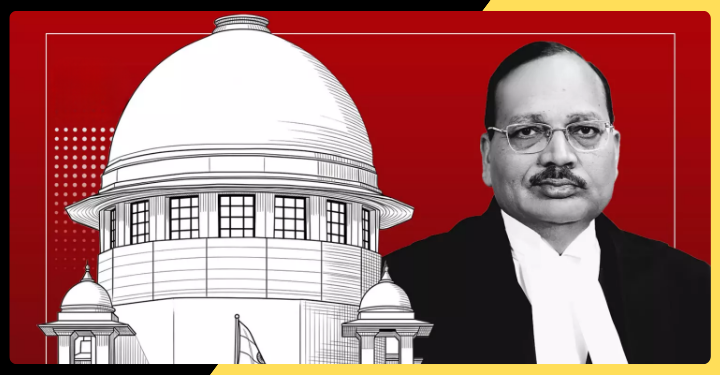
The Supreme Court has indicated that India may need a uniform protocol for dealing with public protests, particularly in situations where allegations of police excess arise. The observation came during the hearing of petitions concerning alleged excessive force used against student protesters during demonstrations over examination irregularities.
Chief Justice of India Surya Kant, along with Justices Joymalya Bagchi and V. Mohana, emphasised that peaceful and lawful protest is constitutionally protected. The bench also observed that the mere fact that people are participating in an agitation cannot, by itself, justify a lathi-charge.
The demand for uniform protocols is significant because the handling of public protests has often been criticised for inconsistency. In one situation, authorities may attempt dialogue and negotiation, while in another, force may be used quickly. Without clear standards, questions can arise about whether police action was necessary and proportionate.
A nationwide protocol could establish a structured system for managing demonstrations. This could include advance communication with organisers, clearly marked protest zones, negotiation with representatives, warnings before dispersal and detailed recording of police action.
The protocol could also clarify the circumstances in which different levels of force may be used. Police authorities must be able to respond to genuine threats, including attacks on officers, violence against civilians and damage to public property. At the same time, peaceful protesters must not be treated as criminals merely because they are criticising the government.
The Supreme Court’s comments suggest that accountability must operate in both directions. Protesters must follow the law and maintain discipline, while police forces must also show restraint. The bench specifically stated that injuries to police personnel and protesters are equally concerning.
The court also raised questions regarding protective equipment for police personnel. If officers are deployed in large demonstrations without adequate helmets, shields or other protective equipment, they may be exposed to unnecessary risks. Better equipment and training could reduce the need for aggressive crowd-control tactics.
The petitions before the court arise from protests involving students and concerns related to examination irregularities. The issue has attracted attention because examination systems directly affect the academic and professional future of millions of young people.
The court’s approach appears to be broader than simply deciding whether a particular lathi-charge was justified. The proceedings may examine how demonstrations should be managed in the future.
Uniform guidelines could potentially reduce confusion for both protesters and police. Citizens would have greater clarity about their rights and responsibilities, while police forces would have a defined framework for responding to different situations.
However, implementing such guidelines would also require training and accountability. Rules alone may not be enough unless officers are trained in negotiation, crowd psychology, de-escalation and proportional use of force.
The Supreme Court’s observations therefore point towards a larger debate about democratic policing. A modern democracy cannot depend solely on force to manage disagreement. At the same time, peaceful protest cannot be allowed to become an excuse for violence.
The challenge before the court is to create a framework that protects dissent while preserving public order. If clear nationwide guidelines eventually emerge, the Jantar Mantar case could become an important reference point for the future management of protests across India.
Journalist Details

Latest entries
 NewsSeptember 20, 2026Mumbai Coastal Road Tragedy: BMW Crashes Through Barrier, Three Young Lives Lost
 Latest NewsSeptember 17, 2026Aaditya Thackeray Denies Disha Salian Link as Father Issues Rs 500 Crore Notice
 Latest NewsSeptember 14, 2026‘I Felt Unsafe’: Gurugram Woman Biker’s Road Rage Ordeal Caught on Video
 Latest NewsSeptember 7, 2026‘Criticism Is Fine, Insults Are Not’: Vijay Redefines the Limits of Political Speech