
Hope for Regional Stability Grows as Iran Nears Hormuz Pact With Oman
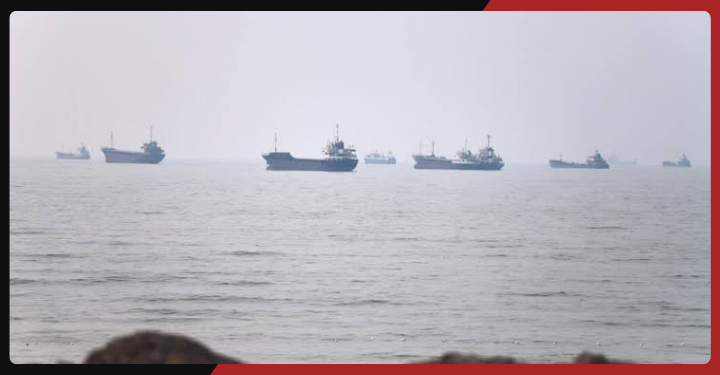
A renewed sense of diplomatic optimism has emerged across the Middle East after Iran announced that its proposed agreement with Oman regarding the Strait of Hormuz has entered its final stage. The announcement has attracted worldwide attention because the Strait of Hormuz is one of the most strategically important waterways on the planet, serving as a vital route for global oil and gas exports. The development gained further significance after former U.S. President Donald Trump indicated that a diplomatic breakthrough in the Gulf region could be approaching, fueling hopes that years of regional tensions may finally begin to ease.
Iranian officials confirmed that negotiations with Oman have progressed significantly and that only a few remaining technical and administrative procedures need to be completed before the agreement is officially signed. Although the complete text of the agreement has not been released, experts believe it will focus on strengthening maritime security, ensuring safe navigation for commercial vessels, improving communication between authorities, and reducing the possibility of military misunderstandings in one of the world’s busiest shipping corridors.
The Strait of Hormuz connects the Persian Gulf with the Gulf of Oman and the Arabian Sea. It is considered one of the world’s most critical maritime chokepoints because nearly 20 percent of global crude oil and a significant share of liquefied natural gas exports travel through this narrow passage each day. Countries including Saudi Arabia, Iraq, Kuwait, the United Arab Emirates, Qatar, and Iran rely heavily on the route for energy exports, making stability in the region essential for the global economy.
Over the past decade, the Strait of Hormuz has repeatedly witnessed periods of heightened tension. Incidents involving oil tankers, naval patrols, drone attacks, and maritime confrontations have raised fears of broader regional conflict. Every security incident has had immediate consequences for international oil markets, shipping insurance costs, and investor confidence. Because of this, any diplomatic initiative aimed at improving security in the region is welcomed by governments, businesses, and financial markets around the world.
Oman has played a central role in facilitating the current negotiations. The Sultanate has earned a strong international reputation as a neutral and trusted mediator capable of maintaining constructive relationships with countries that often disagree on regional issues. Unlike many of its neighbors, Oman has consistently pursued a balanced foreign policy, maintaining dialogue with Iran while also preserving close ties with Gulf Cooperation Council members, the United States, and European nations.
This unique diplomatic position has enabled Oman to quietly host several important negotiations over the years. International observers believe Muscat’s role in the current Hormuz discussions reflects its continued commitment to promoting peaceful solutions rather than military confrontation. The country’s approach has often proven effective during periods of regional uncertainty when direct communication between rival governments became difficult.
Former U.S. President Donald Trump’s comments have further intensified global interest in the negotiations. Speaking about developments in the Middle East, Trump suggested that progress toward a diplomatic breakthrough was being made. Although he stopped short of revealing specific details, his remarks encouraged speculation that broader regional talks may be advancing alongside the Iran-Oman negotiations.
Trump’s optimistic statement is particularly noteworthy because relations between Washington and Tehran deteriorated significantly during his presidency. The U.S. withdrawal from the 2015 nuclear agreement, followed by renewed economic sanctions on Iran, contributed to years of heightened tensions throughout the Gulf region. Despite this difficult history, recent diplomatic efforts indicate that multiple parties may now be seeking greater regional stability through dialogue rather than confrontation.
Economic considerations are also driving the negotiations. Stable maritime traffic through the Strait of Hormuz is essential for maintaining reliable global energy supplies. Any interruption in oil shipments can influence international fuel prices, increase inflation, and affect industries ranging from manufacturing to aviation. Shipping companies operating in the Gulf have long faced increased insurance premiums and additional security expenses because of geopolitical uncertainty.
A successful agreement between Iran and Oman could reduce these risks by establishing stronger coordination mechanisms for maritime security. Improved communication between authorities may help prevent accidental incidents involving naval vessels and commercial ships while enhancing confidence among international shipping operators.
Energy analysts believe that the completion of the agreement could have a positive effect on global financial markets. Investors generally respond favorably to signs of improved geopolitical stability because lower security risks often translate into more predictable energy supplies and stronger economic confidence. Although the agreement alone cannot resolve every challenge facing the region, it could represent an important step toward reducing uncertainty.
For Iran, greater regional cooperation may also provide economic benefits. The country continues to face challenges resulting from international sanctions, inflation, and limited foreign investment. Demonstrating a willingness to engage constructively with neighboring countries could improve Iran’s diplomatic standing and create opportunities for expanded regional trade and cooperation.
Meanwhile, Oman is expected to strengthen its reputation as one of the Middle East’s most respected diplomatic mediators. By successfully facilitating negotiations between regional actors, Muscat reinforces its long-standing foreign policy centered on neutrality, dialogue, and peaceful conflict resolution.
International observers remain cautiously optimistic. Many experts emphasize that the true success of the agreement will depend not only on its signing but also on its long-term implementation. Effective monitoring, transparency, and continued political commitment from all parties will be essential for ensuring lasting stability in the Strait of Hormuz.
The broader geopolitical landscape also appears to be shifting. Several Middle Eastern countries have recently taken steps toward rebuilding diplomatic relationships, recognizing that regional cooperation can produce greater economic prosperity than prolonged political confrontation. Improved security in maritime trade routes forms an important part of this broader trend.
As the final stages of negotiation continue, governments, businesses, shipping companies, and energy markets will closely monitor every development. If successfully concluded, the Iran-Oman Hormuz agreement could become one of the most important diplomatic achievements in the Gulf in recent years. It would not only improve maritime security but also demonstrate that sustained dialogue remains the most effective path toward regional peace, economic stability, and international cooperation.
Journalist Details

Latest entries
 NewsSeptember 20, 2026Mumbai Coastal Road Tragedy: BMW Crashes Through Barrier, Three Young Lives Lost
 Latest NewsSeptember 17, 2026Aaditya Thackeray Denies Disha Salian Link as Father Issues Rs 500 Crore Notice
 Latest NewsSeptember 14, 2026‘I Felt Unsafe’: Gurugram Woman Biker’s Road Rage Ordeal Caught on Video
 Latest NewsSeptember 7, 2026‘Criticism Is Fine, Insults Are Not’: Vijay Redefines the Limits of Political Speech