
Bashar al-Assad and Former Security Chiefs Face Death Penalty as Syria Begins Transitional Justice Process
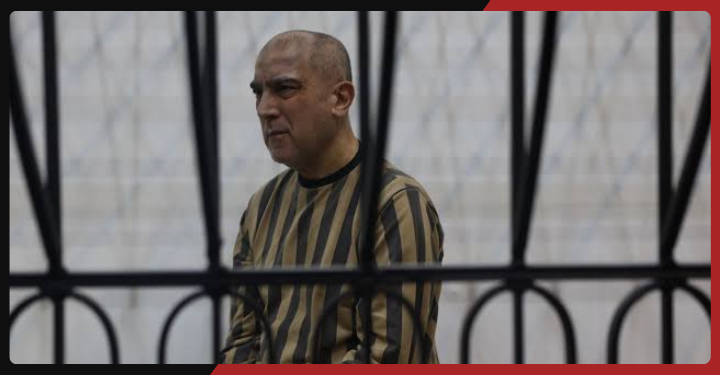
Syria has entered a dramatic new phase in its attempt to deal with the legacy of the Assad government. A Damascus court has sentenced former President Bashar al-Assad, his brother Maher al-Assad and his cousin Atef Najib to death. Assad and Maher were sentenced in absentia, while Najib appeared before the court.
The ruling comes after years of demands from Syrian victims and human rights organizations for accountability over alleged crimes committed during the country’s conflict. The trial is one of the clearest signs yet that the post-Assad authorities intend to use national courts to prosecute senior figures associated with the former government.
The proceedings against Najib began in April 2026. He was the former head of Political Security in Daraa and held a senior position when protests erupted there in 2011. His role has made him one of the most important defendants in the country’s emerging transitional justice process.
The Daraa protests were a turning point in Syria’s modern history. The detention of teenagers who had written anti-government graffiti generated widespread anger. Demonstrations followed, and the government’s security response helped transform a localized protest movement into a nationwide uprising.
Over the following years, Syria became the centre of a devastating civil war. Government forces fought opposition groups across the country, while extremist organizations such as the Islamic State expanded during the chaos. Foreign governments also became directly involved, turning Syria into an arena for competing regional and international interests.
The conflict destroyed infrastructure, displaced millions and produced a massive humanitarian crisis.
The new court proceedings are therefore taking place against a backdrop of enormous public demand for justice.
According to reports, the Damascus court also dealt with the absence of senior former regime officials. In an earlier session, Bashar al-Assad and other defendants were formally treated as absent defendants, while their assets were placed under state administration under provisions of Syria’s criminal procedure law.
The use of trials in absentia is likely to remain one of the most debated aspects of the process. Bashar al-Assad is outside Syria, and the court cannot physically enforce a death sentence against him without custody of the former president.
Yet the symbolic significance remains considerable.
For years, Assad’s opponents argued that accountability would be impossible as long as he remained in power. His fall has changed that calculation. The new authorities now have an opportunity to create a judicial record of alleged abuses and establish responsibility for individuals who previously operated within the state’s security structure.
Atef Najib’s case is especially important because he is available to Syrian authorities. He was arrested in Latakia in January 2026 after returning from Lebanon, according to the Syrian Network for Human Rights.
His appearance in court allowed victims and families to directly observe a former senior security official being questioned in a national courtroom.
However, transitional justice presents challenges beyond individual prosecutions. Syria must decide how broadly to investigate the former regime, how to handle military commanders and security officers, and how to balance punishment with the need to rebuild state institutions.
Human rights experts have also raised questions about whether existing Syrian law is sufficient to address crimes committed during the conflict. Previous legal analysis identified concerns surrounding criminal classifications, individual responsibility and procedural protections.
The death sentences could therefore become a landmark precedent. If the process is considered credible, it could strengthen the country’s emerging justice institutions. If it is viewed as politically motivated or procedurally weak, it could generate further controversy.
For victims, however, the proceedings have an immediate emotional significance. Families who spent years searching for missing relatives or demanding information about those killed can now see the former security establishment confronted by a court.
The latest verdict is consequently more than a punishment handed to three senior figures. It is a test of whether Syria can transform the collapse of the Assad regime into a functioning system of accountability.
The coming months will determine how the sentences are handled and whether additional former officials are brought before the courts. Whatever happens next, the proceedings have already marked a major break from Syria’s previous political order.
Journalist Details

Latest entries
 Latest NewsSeptember 26, 2026Gyanesh Kumar Row Expands as Political Parties Seek Greater Transparency From Poll Body
 Crime NewsSeptember 22, 2026One Suspect Held After Gunfire in Delhi Minor Assault Investigation
 NewsSeptember 20, 2026Mumbai Coastal Road Tragedy: BMW Crashes Through Barrier, Three Young Lives Lost
 Latest NewsSeptember 17, 2026Aaditya Thackeray Denies Disha Salian Link as Father Issues Rs 500 Crore Notice