
Five Tankers Destroyed, Missiles Fired: US-Iran Conflict Enters Dangerous New Phase
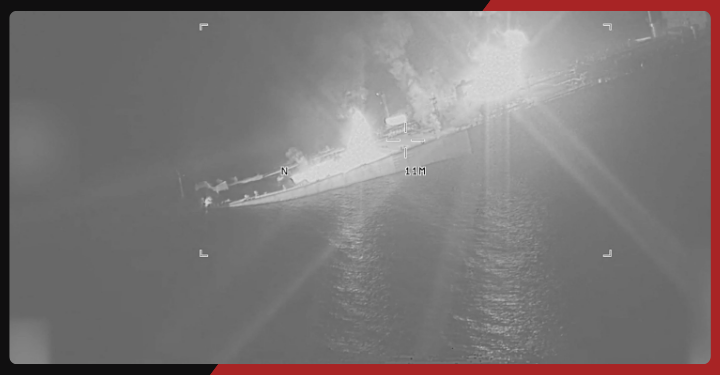
The confrontation between Washington and Tehran has entered a dangerous new phase after the United States destroyed five Iranian oil tankers and Iran responded with missile attacks against U.S. positions in Jordan.
The sequence of events reflects a rapidly developing cycle of retaliation. According to the U.S. military, Iranian forces had launched missile attacks against American naval vessels. Washington then moved against five Iranian crude carriers, saying the vessels were connected to networks supporting Iran’s Revolutionary Guard.
Iran responded with ballistic missile attacks toward American forces in Jordan. Jordan said its air defenses intercepted most of the incoming missiles and that there were no reported casualties from the attack. U.S. officials said the strikes were largely ineffective.
The latest exchange illustrates how quickly the conflict is expanding geographically.
The maritime confrontation is concentrated around the Gulf and Strait of Hormuz, while missile attacks are now reaching U.S. military positions farther west.
The United States has a substantial military presence across the Middle East, including bases and logistical facilities in several countries. Iran’s ability to target these positions gives Tehran multiple potential avenues for retaliation.
Washington, however, has demonstrated that it is prepared to strike Iranian economic assets in addition to military targets.
The destruction of the five oil tankers is particularly important because oil exports remain central to Iran’s economy. By attacking vessels that Washington believes are part of Iran’s oil-financing network, the United States is attempting to reduce Tehran’s ability to generate revenue for military operations.
Iran’s strategy appears to combine direct military pressure with threats against maritime commerce.
The Strait of Hormuz is central to this strategy. Iran has warned ships against entering areas it considers unsafe and has claimed attacks against multiple vessels.
The result is growing uncertainty for shipping companies.
Every additional military incident raises insurance premiums and increases the possibility that ships will avoid the area or demand military escorts.
The economic consequences are already being felt in oil markets. Brent crude climbed above $100 a barrel as concerns about supply disruptions increased.
Higher oil prices could eventually affect fuel costs, transportation expenses and consumer prices around the world.
The conflict also presents a major diplomatic challenge. Any attempt to negotiate while military strikes are continuing would have to address multiple issues, including Iranian oil exports, American naval operations and control of maritime routes.
The risk is that neither side sees an immediate reason to back down.
Iran faces pressure from economic sanctions and restrictions on its oil trade. The United States wants to weaken Tehran’s military capabilities and limit funding for regional operations.
At the same time, both sides have reasons to avoid a completely uncontrolled war.
For Washington, a prolonged regional conflict could expose American troops and naval forces to repeated attacks. For Tehran, direct confrontation with the United States carries the possibility of devastating military and economic consequences.
The coming days could therefore be decisive.
If further attacks are limited, there may still be room for diplomatic intervention. But if another American warship is hit or additional commercial vessels are attacked, the response could become significantly stronger.
The destruction of five tankers and Iran’s missile retaliation have already demonstrated how quickly the confrontation can escalate.
Journalist Details

- Jitendra Kumar is an Indian journalist and social activist from Hathras in Uttar Pradesh is known as the senior journalist and founder of Xpert Times Network Private Limited.
Latest entries
 EntertainmentOctober 25, 2026Udta Teer Crosses ₹11 Crore Net in Two Days Despite a Moderate Opening
 Bharat StoriesOctober 23, 2026DJ BPM AKA Bhavan Parekh Named Among Best DJ Of 2026 For His Signature Sounds, Global Performances And Being A Complete RIOT On Stage
 Bharat StoriesOctober 22, 2026Deejay Sachin Named Among The Best DJ Of 2026 For His 28 Year Legacy In The Electronic Music Industry
 Latest NewsOctober 20, 2026RSS Chief Urges Protesters to Seek Solutions Rather Than Create Social Divisions