From ISRO to Startups: PM Modi Pushes India’s New Space Economy
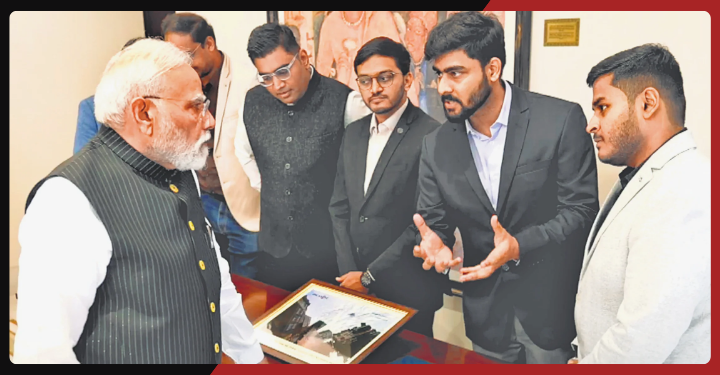
Prime Minister Narendra Modi’s latest interaction with India’s space startups highlights the country’s changing approach to the space sector. While the Indian Space Research Organisation remains a central pillar of the national space programme, the government is increasingly looking to private companies to drive innovation, investment and commercial growth.
Speaking with CEOs and founders of 20 space startups, Modi said India could establish itself very quickly in the global space sector. He pointed to the country’s competitive costs, strong talent pool and willingness to take risks as key advantages.
The remarks reflect the emergence of what is increasingly being described as India’s new space economy. Private companies are now developing launch vehicles, satellites, propulsion systems, avionics and advanced data technologies.
The government’s decision to open greater space-sector opportunities to private participation has played an important role in this transition. Official figures released in July showed that private investment had crossed $618 million, with 105 authorisations issued to private entities.
The startup ecosystem has also grown rapidly. According to the Department of Space, India had more than 400 space startups by June 2026.
This expansion creates new possibilities for India’s space industry. Startups can experiment with technologies and business models that may complement the work of government institutions.
Modi has argued that India’s space sector should not be viewed only through the lens of scientific missions. Instead, space technology should increasingly be applied to real-world problems.
During the interaction, he encouraged companies to explore applications in agriculture, livestock, dairy and environmental monitoring. He also suggested that companies working on space debris collaborate with environmental organisations.
Such applications could make space technology more commercially sustainable. A satellite capable of providing accurate weather or agricultural information, for example, can create value far beyond the traditional objectives of space exploration.
Another important aspect of Modi’s message was the need to attract international talent. The Prime Minister said India should create an environment where people around the world consider the country a destination for building their careers in space.
That ambition could have significant implications for India’s technology ecosystem. Global talent can bring experience, research knowledge, international networks and entrepreneurial expertise. Attracting such professionals could help Indian startups expand into international markets.
However, creating such an ecosystem requires more than government announcements. Companies need access to capital, research infrastructure, skilled workers, testing facilities and reliable regulations.
Modi therefore emphasised policy consistency. Entrepreneurs must have confidence that government decisions will remain stable as they invest in technologies that may take years to mature.
Education is another key element. Modi called for stronger links between space companies and Atal Tinkering Labs so that children can develop curiosity about science and space from an early age.
This focus on young talent could become particularly important as the industry expands. India’s future space ambitions will require engineers, scientists, software developers, entrepreneurs and researchers.
The country’s transformation from a primarily government-led space programme to a mixed public-private ecosystem is already underway. The next challenge will be scaling these companies into internationally competitive businesses.
If India’s startups can combine domestic engineering talent with global investment and customers, they could become an important part of the country’s economic and technological growth.
Modi’s latest message therefore represents more than support for individual startups. It reflects a broader vision of India becoming a major global hub for commercial space technology.
Journalist Details

Latest entries
 NewsOctober 5, 2026Runoff Looms in Brazil as Bolsonaro’s Lead Narrows During Vote Count
 Latest NewsOctober 1, 2026Tennessee Halts Executions After Christa Pike Survives Death Sentence Attempt
 Latest NewsSeptember 26, 2026Gyanesh Kumar Row Expands as Political Parties Seek Greater Transparency From Poll Body
 Crime NewsSeptember 22, 2026One Suspect Held After Gunfire in Delhi Minor Assault Investigation