‘How Can You Vote Without Photo ID?’ Trump’s India Comparison Sparks US Election Debate
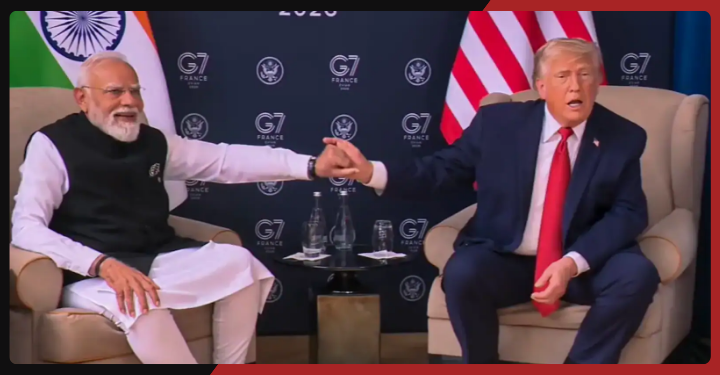
Donald Trump’s latest comments about India’s electoral system have reopened one of the most contentious debates in American politics: should every voter be legally required to present photo identification before casting a ballot?
Trump says the answer should be yes.
The US president recently highlighted India’s voter-identification framework while arguing that American elections need stronger safeguards. He referred to remarks attributed to India’s Chief Election Commissioner Gyanesh Kumar, who Trump said questioned why Americans could vote without a mandatory photo identity document.
Trump then used India’s experience to make his case for the SAVE America Act.
The proposed legislation would require documentary proof of US citizenship for federal voter registration and introduce stronger identification requirements. The White House describes the legislation as an effort to prevent non-citizens from participating in federal elections and strengthen election security.
Trump has particularly focused on the scale of India’s elections.
He pointed out that around 646 million people participated in India’s most recent general election and said that fewer than one per cent voted by mail. He argued that the Indian experience demonstrates that voter identification can function even in an election involving hundreds of millions of people.
The comparison has attracted attention because the two countries have very different electoral structures.
India operates through a central Election Commission that supervises elections across the country. The United States, by contrast, has a decentralised electoral system in which states have substantial authority over election administration.
That distinction is at the heart of the American debate.
Supporters of national voter-ID rules argue that Americans should have a consistent standard regardless of where they live. They believe requiring identification could increase public confidence and reduce opportunities for election-related fraud.
Opponents say that the problem is not simply whether identification is useful, but whether the documentation requirements create barriers for legitimate voters.
For example, people who do not possess certain government-issued documents may have to undertake additional steps to obtain them. Critics fear that such requirements could discourage or prevent some eligible citizens from voting.
The debate also involves mail voting.
Trump has repeatedly criticised widespread mail voting and has pushed for tighter restrictions. His latest comments about India emphasised the fact that less than one per cent of Indian voters used postal ballots in the election figure he cited.
However, the American political system has developed significant reliance on absentee and mail voting, especially among voters who cannot easily appear at polling stations.
The controversy surrounding the SAVE America Act therefore covers several interconnected issues: citizenship verification, photo identification, voter registration and mail voting.
Trump’s use of India as an example gives the argument an international dimension.
Instead of saying that mandatory identification is simply a Republican proposal, Trump is presenting it as a practice already used successfully by another major democracy.
The Indian system, however, is not without its own debates about voter rolls, identification documents and electoral administration. The comparison therefore does not eliminate questions about implementation.
Another interesting development came from US Ambassador to India Sergio Gor, who publicly supported Trump’s argument and highlighted India’s large electorate and voter-ID requirements.
The latest development shows how election policy has become a major political issue in both countries.
For Trump, India provides a powerful example of scale and identification. For critics, the comparison may overlook the fundamental differences between American and Indian electoral structures.
As Congress considers the SAVE America Act, the debate over who can vote, how voters prove eligibility and what documents they should provide is likely to remain at the centre of American politics.
Journalist Details

- Jitendra Kumar is an Indian journalist and social activist from Hathras in Uttar Pradesh is known as the senior journalist and founder of Xpert Times Network Private Limited.
Latest entries
 NewsOctober 6, 2026Harmanpreet Kaur’s Captaincy Journey Ends After Years of Highs, Pressure and Historic Achievements
 NewsOctober 4, 2026Houthi Positions Targeted in Major Yemen Offensive as Army Claims Hundreds Killed
 Latest NewsOctober 3, 2026CJP Announces Fresh Delhi Protest as Dipke Targets Gyanesh Kumar
 Bharat StoriesOctober 2, 2026Named Among The Best Of 2026: Gap Theory Brings Generations Of Musical Experience Across India